AISI H13
AISI H13 Supplier in Tunisia
AISI H13 Tool Steel
Introduction
AISI H13 is a chromium-molybdenum-vanadium alloy tool steel primarily designed for hot-work applications. It is known for its combination of hot-strength, toughness, wear resistance, and resistance to thermal fatigue. These properties make it suitable for tooling exposed to elevated temperatures, repeated heating and cooling, and demanding mechanical loads.
AISI H13 is widely used in hot forging dies, die-casting moulds, extrusion dies, and other industrial tooling components. Its performance depends on material quality, section size, heat treatment, surface condition, and operating temperature.
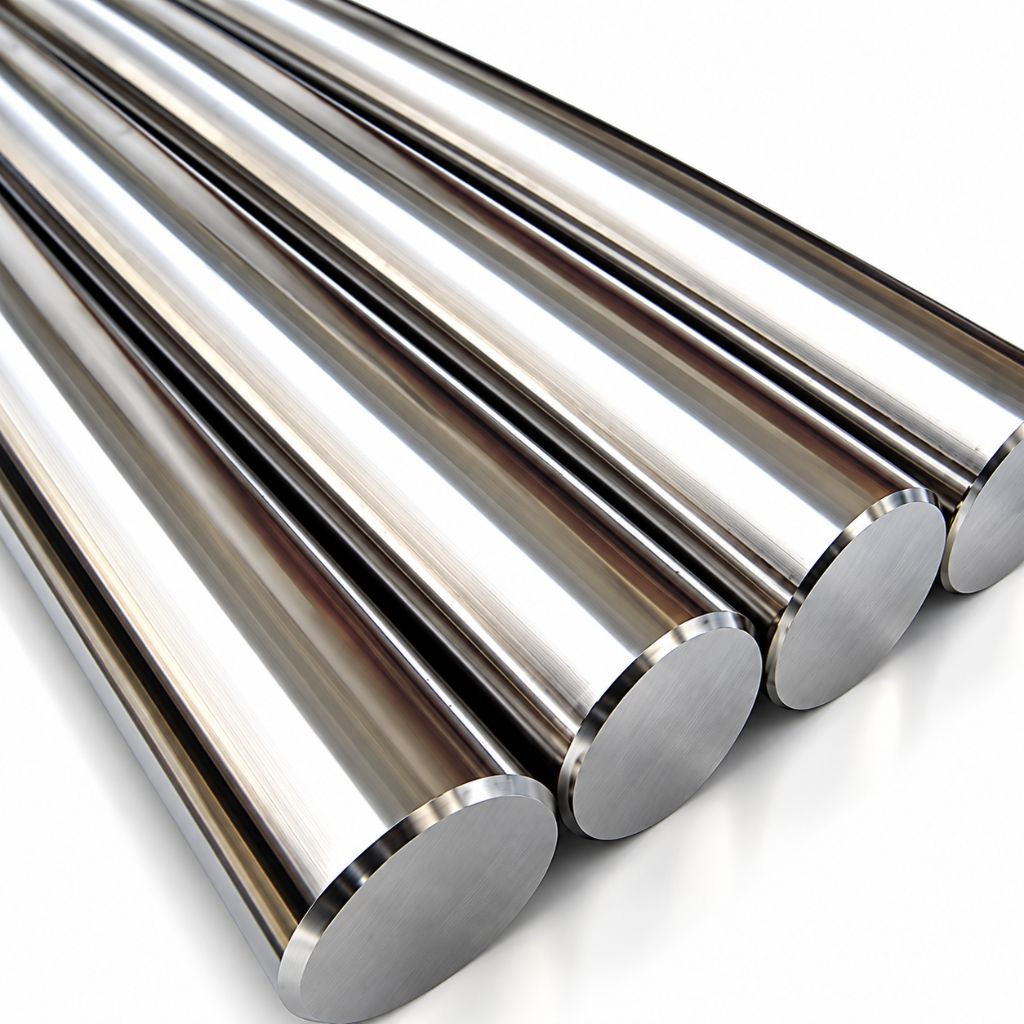
Emirerri Steel supports sourcing enquiries for AISI H13 tool steel according to the required dimensions, product form, delivery condition, and technical specifications, subject to availability.
Key Properties
- Hot-work performance: Suitable for tooling exposed to elevated temperatures and repeated thermal cycles.
- Good toughness: Helps resist cracking when the material and tool design are correctly selected.
- Thermal fatigue resistance: Suitable for applications involving repeated heating and cooling.
- Wear resistance: Supports extended tool life in forging, extrusion, and die-casting operations.
- Good hardenability: Allows suitable mechanical properties to be developed through controlled heat treatment.
- Dimensional stability: Can maintain dimensional accuracy when heat treatment is properly controlled.
- Versatile industrial use: Widely applied in hot-work tooling and metal-forming operations.
AISI H13 Chemical Composition
| Chemical Element | Typical Composition (%) |
|---|---|
| Carbon (C) | 0.32–0.45 |
| Chromium (Cr) | 4.75–5.50 |
| Molybdenum (Mo) | 1.10–1.75 |
| Vanadium (V) | 0.80–1.20 |
| Manganese (Mn) | 0.20–0.50 |
| Silicon (Si) | 0.80–1.20 |
| Phosphorus (P) | Typically 0.030 max. |
| Sulfur (S) | Typically 0.030 max. |
AISI H13 Mechanical Properties
| Mechanical Property | Typical Indicative Value |
|---|---|
| Hardness after heat treatment | Approximately 40–52 HRC |
| Tensile strength | Depends on heat treatment and hardness |
| Yield strength | Depends on material condition and testing requirements |
| Elongation | Depends on heat treatment and test method |
| Compressive strength | Depends on hardness and material condition |
| Toughness | Good for a hot-work tool steel when appropriately heat-treated |
| Thermal fatigue resistance | Good under suitable operating conditions |
| Wear resistance | Good; depends on hardness and application |
AISI H13 Physical Properties
| Physical Property | Approximate Value | Unit |
|---|---|---|
| Density | 7.80 | g/cm³ |
| Modulus of elasticity at room temperature | 210 | GPa |
| Poisson’s ratio | 0.27–0.30 | — |
| Thermal conductivity at 20°C | Approximately 24–30 | W/m·K |
| Specific heat capacity | Approximately 460–480 | J/kg·K |
| Mean coefficient of thermal expansion (20–100°C) | Approximately 10.5–11.5 | × 10⁻⁶/K |
| Electrical resistivity | Approximately 0.50–0.60 | µΩ·m |
Note: Physical-property values are approximate and can vary with temperature and material condition. Consult the manufacturer’s technical data for engineering calculations requiring precise values.
Grade Specifications and Equivalent Materials
AISI H13 is a widely used designation for hot-work tool steel. Several international grades are commonly compared with it.
| Standard or Country | Comparable Grade |
|---|---|
| AISI / ASTM (USA) | H13 |
| EN / DIN (Europe) | X40CrMoV5-1 |
| EN Material Number | 1.2344 |
| JIS (Japan) | SKD61 |
| GB (China) | 4Cr5MoSiV1 |
| Commercial designation | H13 Tool Steel |
Corrosion Resistance
AISI H13 is not stainless steel. Its chromium content contributes to hardenability and hot-work performance but does not provide the corrosion resistance of stainless grades.
Exposure to humidity, seawater, or aggressive chemicals can cause corrosion if suitable protection is not provided.
Possible protection measures include:
- Applying corrosion-inhibiting oil during storage.
- Using protective coatings compatible with the intended application.
- Storing material in a dry environment.
- Cleaning and drying tooling after use.
- Protecting machined surfaces when necessary.
Surface protection should be selected according to the operating environment and manufacturing requirements.
Heat Resistance
AISI H13 is specifically designed for hot-work tooling. It offers a useful combination of hot-strength, toughness, and resistance to thermal fatigue when properly heat-treated.
It is commonly used in forging, hot extrusion, and die-casting operations where tooling is exposed to elevated temperatures and repeated thermal cycling.
Actual tool performance depends on several factors:
- Operating temperature and exposure duration.
- Frequency and severity of thermal cycles.
- Cooling and lubrication practices.
- Tool geometry and surface finish.
- Hardness and heat-treatment condition.
- Metallurgical quality and manufacturing process.
For high-temperature applications, material selection should be based on the actual service conditions and the required tool life.
Heat Treatment
Heat treatment is essential for achieving the required properties of AISI H13. The procedure must be selected according to component dimensions, geometry, and intended operating conditions.
Annealing
Annealing is generally used to obtain a material condition suitable for machining and preparation before final hardening.
Preheating
Controlled preheating may be used to reduce temperature gradients and thermal stresses before austenitizing.
Austenitizing and Hardening
The steel is heated according to a specified procedure and cooled using a suitable method to develop the required microstructure and hardness. Exact parameters depend on section size, component geometry, and manufacturer recommendations.
Tempering
Tempering is performed after hardening to adjust hardness and improve toughness. Multiple tempering cycles may be required, depending on the heat-treatment procedure and final property requirements.
Incorrect heat treatment can cause distortion, cracking, or nonconforming properties. Heat treatment should follow a qualified procedure and be verified through the required inspections.
Welding
Welding AISI H13 requires careful planning to minimize cracking and localized changes in mechanical properties.
Depending on the material condition and repair requirements, precautions may include:
Assessing weldability before welding or repair.
Preparing the repair area appropriately.
Applying controlled preheating.
Selecting compatible filler material.
Monitoring interpass temperature.
Controlling cooling conditions.
Performing post-weld heat treatment when required.
Inspecting the welded area according to the applicable specification.
For critical tooling, welding should follow a qualified procedure and be performed by competent personnel.
Fabrication
AISI H13 is used to manufacture tooling and components exposed to elevated temperatures and demanding thermomechanical conditions.
Machining
Machining is generally performed in the annealed condition. Cutting parameters should be selected according to hardness, dimensions, tooling, and the required surface finish.
Forging
Forging must be performed within an appropriate temperature range for the grade and process. Cooling after forging and subsequent heat treatment should be controlled to achieve the required properties.
Grinding and Finishing
Grinding is used to achieve the required dimensions and surface finish. Process parameters must be controlled to prevent grinding burns, excessive residual stresses, and cracking.
Inspection After Fabrication
Depending on project requirements, inspections may include:
Dimensional verification.
Visual and surface examination.
Hardness testing.
Mechanical testing, where specified.
Non-destructive testing, where required.
Verification of material certificates and traceability.
Applications
AISI H13 is widely used in industrial applications requiring hot-work performance, toughness, and thermal fatigue resistance.
Hot Forging
Hot forging dies.
Punches and forming tools.
Tooling inserts exposed to elevated temperatures.
Dies used in metal-component production.
Die Casting
Die-casting moulds for non-ferrous metals.
Mould inserts.
Cores and tooling components.
Components subjected to repeated thermal cycles.
Hot Extrusion
Extrusion dies.
Mandrels and associated tooling.
Components exposed to high pressure and temperature.
Metalworking and General Manufacturing
Hot-forming tools.
Industrial components exposed to thermal stress.
Tooling requiring a balance of strength, toughness, and dimensional stability.
The suitability of AISI H13 should be confirmed according to operating temperature, mechanical loads, tool geometry, heat treatment, and required service life.
Emirerri Steel – AISI H13 Tool Steel Supplier
Emirerri Steel supports industrial sourcing requirements for tool steel used in manufacturing, metalworking, and engineering applications. We review AISI H13 enquiries according to the required dimensions, product form, delivery condition, applicable specifications, and quality documentation.
We support project requirements across Tunisia and North Africa, subject to product availability and agreed technical requirements.
To request a quotation, please provide the required grade, product form, dimensions, quantity, delivery condition, and certification requirements. Availability and delivery schedules are confirmed at the quotation stage.
Contact us