ASTM A182 F11
ASTM A182 F11 Forged Alloy Steel Supplier in Tunisia
Introduction
ASTM A182 F11 Forged Alloy Steel is a chromium-molybdenum alloy steel grade used to manufacture forged flanges, forged fittings, valve components and other pressure-containing parts for industrial piping systems. It is selected for applications requiring reliable mechanical properties, resistance to elevated-temperature service and compliance with applicable material specifications.
The ASTM A182/A182M specification covers forged or rolled alloy-steel and stainless-steel piping components, including flanges, fittings, valves and similar parts intended for pressure service. Grade F11 is widely associated with chromium-molybdenum alloy steels used in refineries, petrochemical facilities, power-generation plants and industrial piping systems, where the grade is permitted by the applicable design code.
ASTM A182 F11 is available in different classes, including Class 1, Class 2 and Class 3. These classes have distinct requirements, so the correct class must be specified according to the design conditions, mechanical-property requirements and applicable standard.
Key Features
- Chromium-molybdenum alloy steel
- Suitable for forged pressure-containing components
- Improved oxidation resistance compared with many carbon steels
- Suitable for selected elevated-temperature applications
- Used for flanges, forged fittings and valve components
- Mechanical properties controlled by the applicable specification
- Available in different classes according to the standard
- Suitable for industrial piping systems
- Fabrication possible using qualified procedures
- Material traceability and certification according to purchase requirements
Specifications
| Property | Description |
|---|---|
| Material Designation | ASTM A182 F11 |
| Material Type | Forged alloy steel |
| Alloy Family | Chromium-molybdenum steel |
| Main Standard | ASTM A182/A182M |
| Classes | Class 1, Class 2 and Class 3, as applicable |
| Common Products | Flanges, forged fittings, valve components |
| Service | Pressure-containing piping systems |
| Heat Treatment | According to applicable class and specification |
| Quality Control | As required by purchase specification |
| Certification | Mill Test Certificate (MTC), as specified |
ASTM A182 F11 Chemical Composition
The chemical composition of ASTM A182 F11 is governed by the applicable edition of ASTM A182/A182M. Exact limits should be checked against the relevant grade and class requirements.
| Element | Function |
|---|---|
| Carbon (C) | Contributes to strength and hardenability |
| Manganese (Mn) | Supports strength and hardenability |
| Silicon (Si) | Acts as a deoxidizing element |
| Chromium (Cr) | Improves oxidation resistance and high-temperature performance |
| Molybdenum (Mo) | Supports high-temperature strength |
| Phosphorus (P) | Controlled to maintain material quality |
| Sulfur (S) | Controlled to limit undesirable metallurgical effects |
| Iron (Fe) | Principal constituent, balance |
Important: Exact chemical limits must be verified against the applicable ASTM A182/A182M edition and the manufacturer’s Mill Test Certificate.
ASTM A182 F11 Mechanical Properties
The mechanical properties of ASTM A182 F11 depend on the applicable class, product dimensions, heat-treatment condition and standard edition.
| Property | Requirement |
|---|---|
| Tensile Strength | According to applicable ASTM requirements |
| Yield Strength | According to applicable ASTM requirements |
| Elongation | According to the standard and specimen dimensions |
| Reduction of Area | As required by the applicable specification |
| Hardness | Within applicable class limits |
| Impact Testing | Where required by the design code or purchase order |
For engineering and procurement purposes, guaranteed mechanical values should be obtained from the applicable standard and the manufacturer’s material test certificate.
ASTM A182 F11 Physical Properties
ASTM A182 F11 has physical characteristics typical of low-alloy chromium-molybdenum steels. Actual values can vary with temperature, composition and metallurgical condition.
| Physical Property | Description |
|---|---|
| Density | Typical of low-alloy steels |
| Elastic Modulus | Temperature dependent |
| Thermal Conductivity | Composition and temperature dependent |
| Thermal Expansion | Temperature dependent |
| Magnetic Behaviour | Generally magnetic |
For high-temperature design calculations, use material-property data accepted by the applicable design code.
Types of ASTM A182 F11 Products
ASTM A182 F11 is used for manufacturing various forged components for industrial piping systems, subject to applicable product standards and manufacturer capabilities.
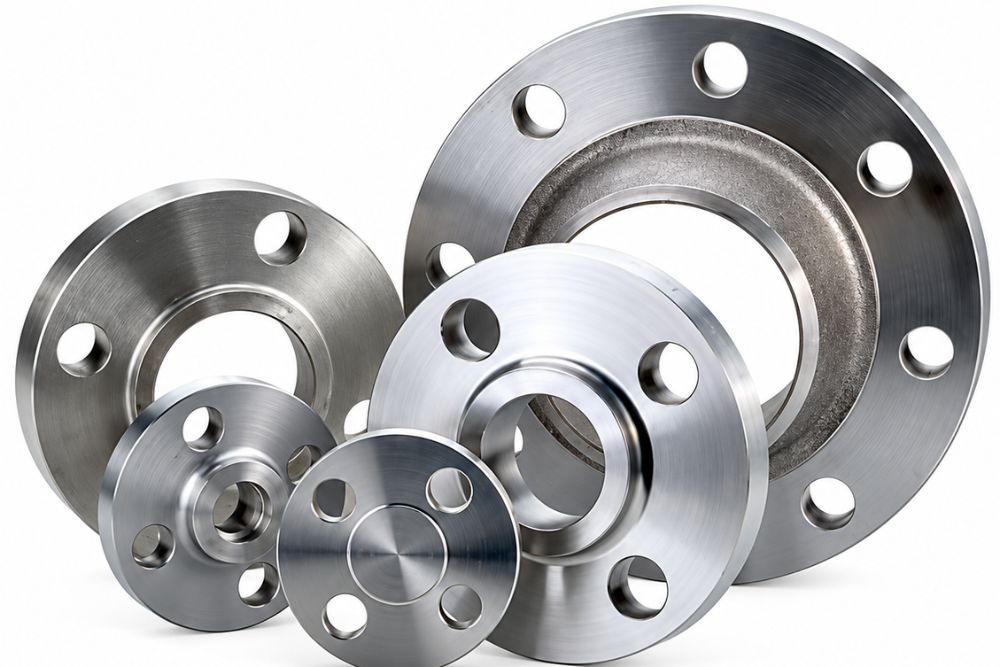
Forged Flanges
Weld Neck Flanges
Socket Weld Flanges
Slip-On Flanges, where permitted by the product specification
Threaded Flanges
Blind Flanges
Forged Fittings and Components
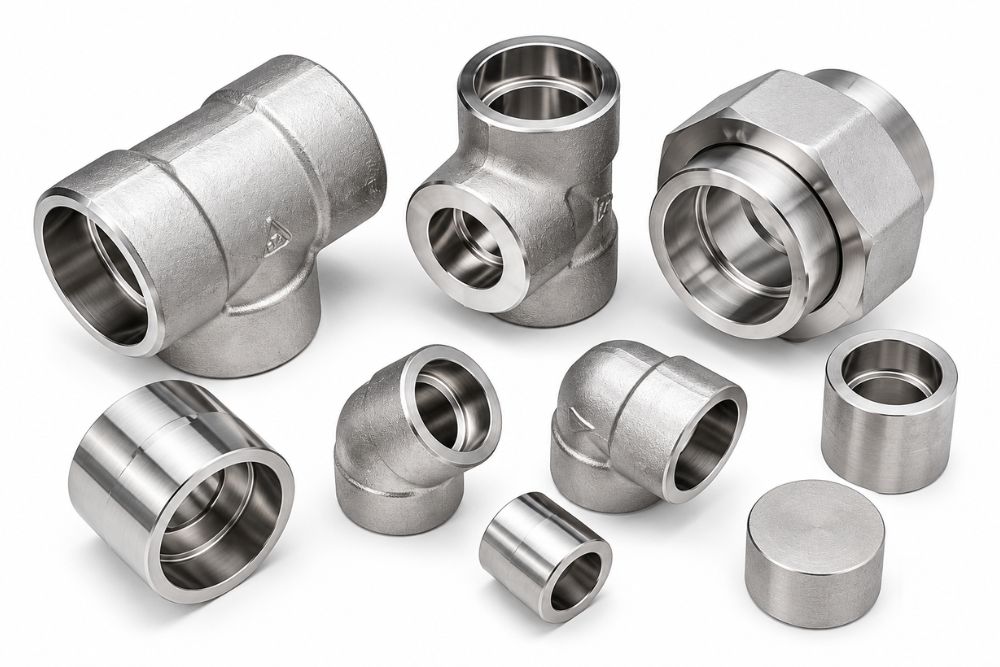
Forged piping fittings
Valve components
Adapters and connecting components
Special forged parts
Pressure-containing piping components
Product dimensions, pressure classes and facing types should be defined according to the applicable product standards. ASME B16.5 covers many standard pipe flanges and flanged fittings, while ASME B16.11 covers certain forged fittings.
High-Temperature Performance
ASTM A182 F11 is used in applications where components are exposed to elevated temperatures and internal pressure. Chromium and molybdenum contribute to oxidation resistance and mechanical performance at elevated temperatures.
The maximum allowable operating temperature cannot be determined from the F11 designation alone. It depends on:
Applicable design code
Design pressure and temperature
Component dimensions and thickness
Code-recognized allowable stresses
Specified F11 class
Heat-treatment condition
Operating environment
The selected material must be approved for the intended service conditions by the applicable engineering code.
Corrosion and Oxidation Resistance
ASTM A182 F11 is a chromium-molybdenum alloy steel and is not stainless steel.
Its chromium content improves resistance to oxidation at elevated temperatures compared with many carbon steels. Molybdenum contributes to high-temperature mechanical performance, but the material is not suitable for every corrosive environment.
For applications involving chlorides, acids or aggressive process fluids, material selection should consider fluid chemistry, operating temperature, pressure and expected service life.
Heat Treatment
Heat treatment of ASTM A182 F11 must comply with the applicable edition of ASTM A182/A182M, the specified class and the manufacturer’s qualified procedures.
The heat-treatment process is intended to achieve the required mechanical properties and metallurgical condition.
Important controls may include:
Heating temperature
Holding time
Cooling conditions
Final hardness
Mechanical-property verification
Compliance with the purchase specification
Uncontrolled heat treatment can change strength, hardness and toughness. The applicable standard and manufacturing documentation should always be followed.
Welding of ASTM A182 F11
Welding ASTM A182 F11 requires a qualified procedure suitable for chromium-molybdenum alloy steel and the intended service conditions.
Important considerations include:
Base-metal composition
Component thickness
Joint preparation
Welding consumable selection
Preheating, where required
Interpass temperature control
Heat input
Post-weld heat treatment (PWHT), where required
For pressure-containing systems, welding procedures and personnel qualifications must comply with the governing construction code. ASME Section IX may apply when specified by the project.
Machining and Fabrication
ASTM A182 F11 can be machined and fabricated using methods appropriate for alloy steel in its supplied metallurgical condition.
Machining parameters should account for hardness, heat treatment, component geometry and tooling. Fabrication operations must preserve the dimensions and material properties required by the applicable specification.
Any significant modification after heat treatment should be assessed against the manufacturer’s recommendations and the governing engineering code.
Applications
Oil and Gas Industry
Piping flanges
Forged fittings
Valve components
Refinery piping systems
Pressure-containing equipment
Petrochemical Industry
Process piping networks
Elevated-temperature piping circuits
Pressure-containing components
Refinery and processing equipment
Power Generation
Industrial piping components
Forged pressure parts
Auxiliary equipment
Thermal plant applications where permitted by the design code
Industrial Engineering
Forged flanges and fittings
Valve components
Pressure equipment
Custom-forged industrial parts
ASTM A182 F11 vs ASTM A182 F22
ASTM A182 F11 and F22 are chromium-molybdenum alloy-steel grades used for forged components. Their compositions and mechanical-property requirements differ, so they should not be considered interchangeable without engineering verification.
| Property | ASTM A182 F11 | ASTM A182 F22 |
|---|---|---|
| Alloy Family | Chromium-molybdenum steel | Chromium-molybdenum steel |
| Chemical Composition | According to F11 class | According to F22 requirements |
| Chromium and Molybdenum | According to specification | Generally higher alloy content, subject to specification |
| Mechanical Properties | Class- and standard-dependent | Standard-dependent |
| Typical Products | Forged pressure components | Forged pressure components |
| Interchangeability | Requires verification | Requires verification |
The correct grade should be selected according to operating temperature, pressure, allowable stresses, material class and applicable design code.
Quality and Certification
ASTM A182 F11 components should be supplied with documentation required by the purchase order and applicable standard.
Quality documentation may include:
Mill Test Certificate (MTC)
Chemical analysis
Mechanical test results
Heat-treatment records
Hardness results, where required
Dimensional inspection report
Material traceability
EN 10204 Type 3.1 certification, where contractually applicable
Third-party inspection documents, where specified
Documentation should match the supplied grade, class, product, manufacturing lot and purchase order.
ASTM A182 F11 Forged Alloy Steel Supplier
Emirerri Steel supplies industrial piping products for the oil and gas, petrochemical, power-generation and general engineering sectors.
We can support enquiries for ASTM A182 F11 forged flanges, forged fittings and pressure-containing components, subject to the required class, dimensions, pressure ratings, applicable standards and product availability.
Material certification, traceability, inspection and project-specific documentation can be coordinated according to customer requirements.
Conclusion
ASTM A182 F11 Forged Alloy Steel is used to manufacture flanges, forged fittings, valve components and other pressure-containing parts for industrial piping systems. Its chromium-molybdenum composition supports oxidation resistance and mechanical performance in selected elevated-temperature applications.
The correct F11 class must be selected according to the design pressure, temperature, process fluid, heat-treatment requirements and governing engineering code. Before ordering, verify the applicable edition of ASTM A182/A182M, product dimensions, mechanical properties and the manufacturer’s Mill Test Certificate.
Contact Us