ASTM A106 Grade B
Carbon Steel ASTM A106 Grade B
ASTM A106 Grade B Carbon Steel is one of the most widely used grades for seamless carbon steel pipes designed for high-temperature and high-pressure service.
ASTM A106/A106M covers seamless carbon steel pipe intended for elevated-temperature service. ASTM A106 Grade B is widely used in oil & gas refineries, petrochemical plants, power generation facilities, process plants, steam systems, and industrial piping.
Grade B provides an excellent balance of mechanical strength, ductility, weldability, machinability, and high-temperature performance. Compared with ASTM A106 Grade A, Grade B provides higher minimum tensile and yield strength and is therefore commonly selected for more demanding piping applications.
Key Features
- Carbon steel for high-temperature service
- Seamless steel pipe
- High mechanical strength
- Good elevated-temperature performance
- Good ductility
- Good weldability
- Good bendability
- Good machinability
- Suitable for pressure piping
- Suitable for process piping
- Wide range of pipe sizes and wall thicknesses
- Widely used in refineries and power plants
ASTM A106 Grade B Specifications
| Specification | Details |
|---|---|
| Grade | ASTM A106 Grade B |
| Material | Carbon Steel |
| Standard | ASTM A106/A106M |
| UNS | K03006 |
| Product | Seamless Carbon Steel Pipe |
| Manufacturing | Seamless |
| Available Grades | A, B, C |
| Ends | Plain or Beveled |
| Service | High Temperature & Pressure |
| Weldability | Good |
| Main Applications | Steam, Process, Refinery, Energy, Petrochemical |
Types of ASTM A106 Grade B Pipe
ASTM A106 Grade B is primarily supplied as seamless carbon steel pipe.
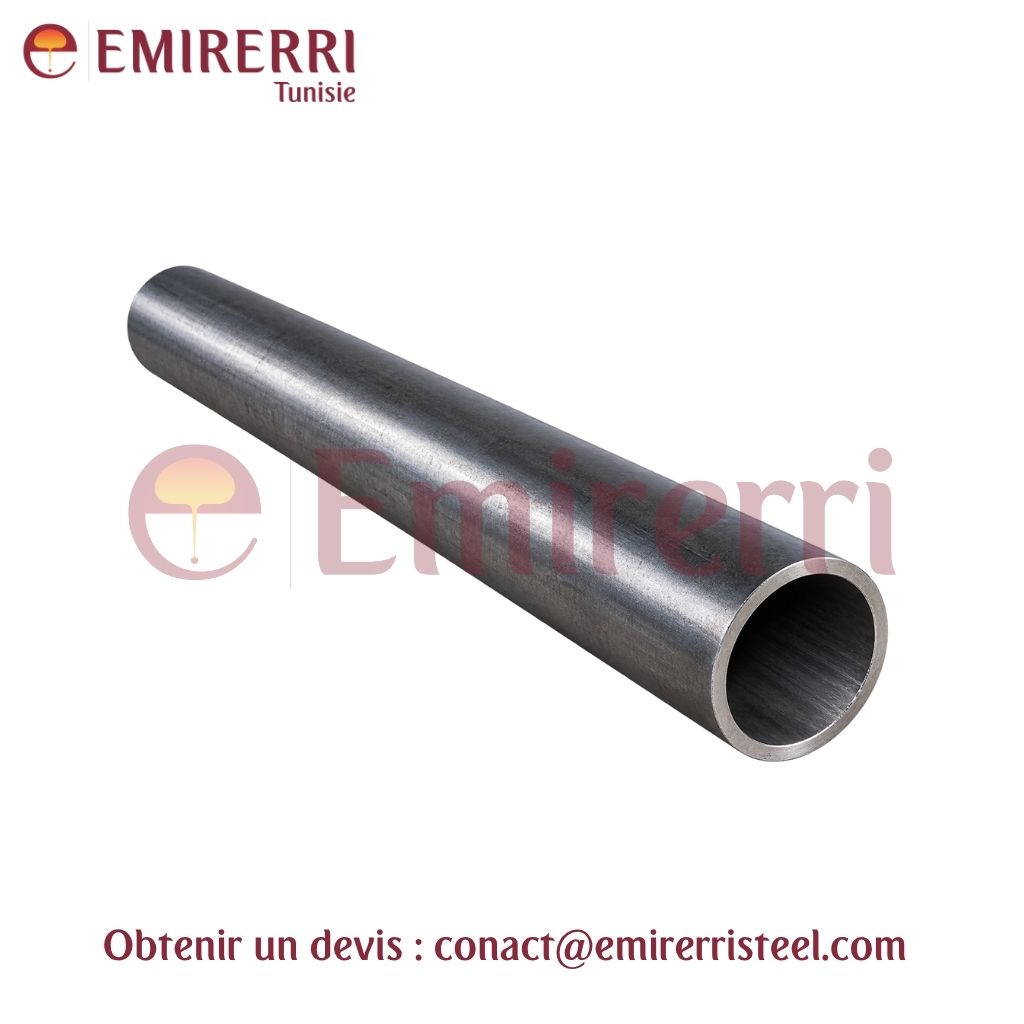
ASTM A106 Grade B Seamless Pipe
Seamless ASTM A106 Grade B pipe is manufactured without a longitudinal welded seam and is designed for applications where pressure and elevated-temperature service are important considerations.
Common End Configurations
- Plain End
- Beveled End
- Threaded End for selected applications
Beveled ends are commonly used for butt-welding during piping installation.
Equivalent Grades
| Standard | Comparable Grade |
|---|---|
| ASTM | A106 Grade B |
| UNS | K03006 |
| EN | Depends on application |
| DIN | Depends on product |
| JIS | Depends on project requirements |
ASTM A106 Grade B should not automatically be treated as an exact equivalent to another carbon steel grade. Material substitution should consider pressure, temperature, fluid, dimensions, design code, inspection, testing, and certification requirements.
Available Sizes
ASTM A106 Grade B seamless pipe is available in a broad range of nominal diameters and wall thicknesses.
Common Pipe Schedules
- SCH 10
- SCH 20
- SCH 30
- SCH 40
- SCH 60
- SCH 80
- SCH 100
- SCH 120
- SCH 140
- SCH 160
- XXS
Product Forms
- Seamless Pipe
- Plain-End Pipe
- Beveled-End Pipe
- Threaded Pipe for suitable applications
Exact availability depends on nominal diameter, wall thickness, length, manufacturing requirements, and project specifications.
ASTM A106 Grade B Chemical Composition
| Element | Content (%) |
|---|---|
| Carbon (C) | ≤ 0.30 |
| Manganese (Mn) | 0.29–1.06* |
| Phosphorus (P) | ≤ 0.035 |
| Sulfur (S) | ≤ 0.035 |
| Silicon (Si) | ≥ 0.10 |
| Chromium (Cr) | ≤ 0.40 |
| Nickel (Ni) | ≤ 0.40 |
| Molybdenum (Mo) | ≤ 0.15 |
| Copper (Cu) | ≤ 0.40 |
| Vanadium (V) | ≤ 0.08 |
| Iron (Fe) | Balance |
*Chemical requirements should be verified against the applicable edition of ASTM A106/A106M and the material test certificate.
ASTM A106 Grade B Mechanical Properties
| Property | Minimum Value |
|---|---|
| Tensile Strength | 415 MPa |
| Yield Strength | 240 MPa |
| Elongation | According to pipe diameter and wall thickness |
| Hardness | According to applicable requirements |
Grade B provides substantially higher minimum mechanical strength than Grade A, making it a popular choice for demanding industrial piping applications.
ASTM A106 Grade B Physical Properties
| Property | Approximate Value |
|---|---|
| Density | 7.85 g/cm³ |
| Modulus of Elasticity | ≈ 200 GPa |
| Thermal Conductivity | ≈ 45–55 W/m·K |
| Thermal Expansion Coefficient | ≈ 11–12 × 10⁻⁶ /°C |
| Specific Heat Capacity | ≈ 480 J/kg·K |
| Magnetic Properties | Magnetic |
Corrosion Resistance
ASTM A106 Grade B is a carbon steel and therefore does not have the inherent corrosion resistance of stainless steel.
It may be susceptible to:
- Atmospheric corrosion
- Moisture
- Water
- Chlorides
- Marine environments
- Chemical exposure
- Internal corrosion depending on the transported fluid
Corrosion Protection
Depending on the service environment, protection may include:
- Industrial painting
- Epoxy coating
- Internal coatings
- Cathodic protection
- Corrosion inhibitors where applicable
For highly corrosive applications, stainless steel, alloy steel, or specially protected carbon steel may be required.
Heat Resistance
ASTM A106 Grade B is specifically intended for elevated-temperature piping applications.
It can be used for systems transporting:
- Steam
- Hot water
- Hot hydrocarbons
- Process fluids
- High-temperature gases
However, carbon steel loses mechanical strength as temperature increases. Therefore, allowable pressure and temperature must be determined according to the applicable design code, pipe wall thickness, operating temperature, and service conditions.
Heat Treatment
Heat treatment requirements depend on the pipe dimensions, manufacturing process, and applicable requirements of ASTM A106/A106M.
Normalizing
Normalizing may be used to achieve a more uniform microstructure and balanced mechanical properties.
Stress Relieving
Stress relieving may be applied after certain fabrication or welding operations to reduce residual stresses.
Post-Weld Heat Treatment
Where required by the applicable design code, PWHT depends on factors such as wall thickness, welding procedure, material condition, and service temperature.
Welding
ASTM A106 Grade B has good weldability and can be welded using several conventional processes.
Common Welding Processes
- SMAW
- GTAW / TIG
- GMAW / MIG
- FCAW
- SAW
Welding Applications
- Butt welding
- Fitting connections
- Flange welding
- Branch connections
- Pipe spool fabrication
- Process piping assemblies
For thick-wall pipe or demanding service conditions, preheating, interpass temperature control, and PWHT may be required according to the qualified welding procedure and applicable design code.
Fabrication
ASTM A106 Grade B can be processed using conventional pipe fabrication techniques.
Cutting
- Mechanical sawing
- Plasma cutting
- Oxy-fuel cutting
- Abrasive cutting
Bending
Pipe bending can be performed according to the required radius and applicable fabrication requirements.
Machining
- Drilling
- Turning
- Milling
- Threading
- Tapping
End Preparation
- Plain ends
- Beveled ends
- Welding-end preparation
Applications
Oil & Gas Industry
- Process piping
- Steam lines
- Hot hydrocarbon lines
- Pressure piping
- Auxiliary systems
Refineries
- Hydrocarbon lines
- Process piping
- Steam systems
- Hot-fluid lines
- Heating systems
Petrochemical Industry
- Process piping
- Steam networks
- Hot-fluid systems
- Industrial utility lines
Power Generation
- Steam piping
- Hot-water systems
- Auxiliary piping
- Thermal systems
- Process piping
General Industry
- Industrial process piping
- Thermal systems
- Pressure piping
- Industrial heating systems
- High-temperature fluid transportation
ASTM A106 Grade B in Tunisia, Algeria, Morocco & Libya
Carbon Steel ASTM A106 Grade B is well suited to industrial projects across Tunisia, Algeria, Morocco, and Libya, particularly in oil & gas, refineries, petrochemicals, power generation, steam systems, energy, and industrial manufacturing.
It is particularly suitable for seamless piping systems operating under elevated temperature and pressure when the operating conditions are compatible with ASTM A106/A106M.
For North African projects, selection between ASTM A106 Grade A, Grade B, ASTM A53 Grade B, and API 5L should be based on:
- Operating pressure
- Operating temperature
- Fluid characteristics
- Pipe dimensions
- Manufacturing process
- Applicable design code
- Inspection and testing requirements
ASTM A106 Grade A vs Grade B
| Property | ASTM A106 Grade A | ASTM A106 Grade B |
|---|---|---|
| Material | Carbon Steel | Carbon Steel |
| Manufacturing | Seamless | Seamless |
| Tensile Strength | ≥ 330 MPa | ≥ 415 MPa |
| Yield Strength | ≥ 205 MPa | ≥ 240 MPa |
| Mechanical Strength | Good | Higher |
| High-Temperature Service | Yes | Yes |
| Weldability | Good | Good |
| Typical Applications | Process & thermal service | More demanding process piping |
ASTM A106 Grade B is generally selected when higher minimum mechanical strength is required.
ASTM A106 Grade B vs ASTM A53 Grade B
| Property | ASTM A106 Grade B | ASTM A53 Grade B |
|---|---|---|
| Material | Carbon Steel | Carbon Steel |
| Manufacturing | Seamless | Seamless or Welded |
| Tensile Strength | ≥ 415 MPa | ≥ 415 MPa |
| Yield Strength | ≥ 240 MPa | ≥ 240 MPa |
| High-Temperature Service | Specifically intended for this service | General-purpose piping |
| Typical Applications | Steam, process, refinery, hot fluids | Water, gas, utilities, general piping |
Conclusion
Carbon Steel ASTM A106 Grade B is one of the most widely specified grades for seamless carbon steel pipes used in high-temperature and pressure applications.
With a minimum tensile strength of 415 MPa and yield strength of 240 MPa, it offers a strong combination of mechanical strength, ductility, weldability, fabrication performance, and elevated-temperature capability.
It is widely used in refineries, power plants, petrochemical facilities, oil & gas projects, steam systems, thermal processes, and industrial process piping.
For projects in Tunisia, Algeria, Morocco, and Libya, ASTM A106 Grade B provides a reliable solution for seamless high-temperature piping when the operating pressure, temperature, fluid characteristics, pipe dimensions, and applicable design code meet the requirements of ASTM A106/A106M.
Contact Us