HASTELLOY C-276 Alloy
HASTELLOY C-276 nickel-molybdenum-chromium-tungsten alloy Supplier in Tunisia
HASTELLOY C-276 is a nickel-chromium-molybdenum-tungsten alloy designed for industrial applications requiring excellent resistance to aggressive chemical environments. Identified by UNS N10276 and Werkstoff Number 2.4819, this alloy is widely used in chemical processing, petrochemical production, pollution control and specialized industrial equipment.
Its carefully balanced composition provides excellent resistance to general corrosion, pitting, crevice corrosion and several forms of stress-corrosion cracking in suitable environments. The combination of nickel, chromium and molybdenum makes HASTELLOY C-276 a valuable material for equipment exposed to acids, chloride-containing solutions and mixed chemical streams.
Emirerri Steel supports industrial procurement requirements for specialty alloys and piping products serving chemical processing, oil and gas, petrochemical, power generation, mining and other demanding industries. Product forms, dimensions, standards and availability are confirmed according to project requirements.
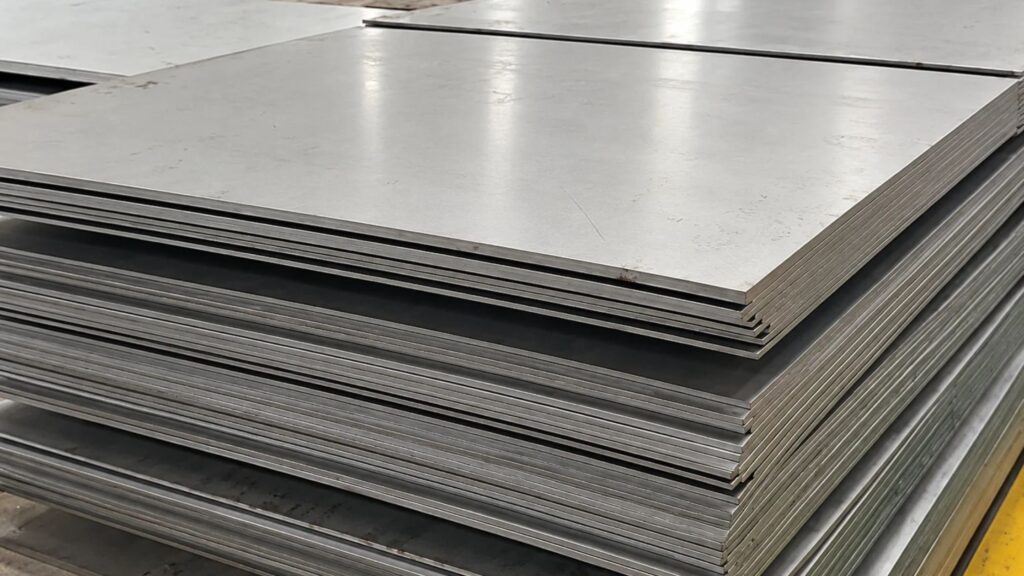
Key Properties
- Grade: HASTELLOY C-276
- UNS Number: N10276
- Werkstoff Number: 2.4819
- Alloy Type: Nickel-chromium-molybdenum-tungsten alloy
- Corrosion Resistance: Excellent resistance to many aggressive chemical environments
- Pitting and Crevice Corrosion: High resistance under suitable service conditions
- Weldability: Good with qualified procedures and compatible filler metals
- Fabrication: Suitable for manufacturing a range of industrial components
- Main Industries: Chemical processing, petrochemical, pollution control, wastewater treatment and industrial piping
HASTELLOY C-276 Chemical Composition
The following table shows commonly specified composition limits. The applicable product standard and material test certificate should be checked before procurement.
| Chemical Element | Composition (%) |
|---|---|
| Nickel (Ni) | Balance |
| Chromium (Cr) | 14.50–16.50 |
| Molybdenum (Mo) | 15.00–17.00 |
| Iron (Fe) | 4.00–7.00 |
| Tungsten (W) | 3.00–4.50 |
| Cobalt (Co) | 2.50 max. |
| Manganese (Mn) | 1.00 max. |
| Vanadium (V) | 0.35 max. |
| Silicon (Si) | 0.08 max. |
| Carbon (C) | 0.010 max. |
| Phosphorus (P) | 0.040 max. |
| Sulfur (S) | 0.030 max. |
Nickel forms the base of the alloy. Chromium and molybdenum contribute to corrosion resistance, while tungsten supports performance in selected aggressive environments. Low carbon and silicon contents help limit certain detrimental precipitation effects during welding and thermal processing.
HASTELLOY C-276 Mechanical Properties
The following values are indicative minimum values commonly referenced for certain annealed product forms. Actual requirements vary according to product type, dimensions, material condition and the governing specification.
| Mechanical Property | Indicative Value |
|---|---|
| Tensile Strength | 690 MPa minimum |
| 0.2% Yield Strength | 283 MPa minimum |
| Elongation | 40% minimum |
| Hardness | Depends on product form and condition |
These values are not universal guarantees for every product. For pressure-containing or critical components, confirm the applicable specification and material test certificate.
HASTELLOY C-276 Physical Properties
| Physical Property | Typical Value |
|---|---|
| Density | Approximately 8.89 g/cm³ |
| Modulus of Elasticity at Room Temperature | Approximately 205 GPa |
| Thermal Conductivity at Room Temperature | Approximately 9.8 W/m·K |
| Mean Thermal Expansion Coefficient | Approximately 12.2 × 10⁻⁶/K |
These values are indicative and may vary with temperature and material condition. Engineering calculations should use data appropriate to the intended operating conditions.
Material Standards
HASTELLOY C-276 is covered by several ASTM and ASME specifications, depending on product form and manufacturing method.
| Product Form | Common Specification |
|---|---|
| Sheets, Plates and Strips | ASTM B575 / ASME SB-575 |
| Bars and Rods | ASTM B574 / ASME SB-574 |
| Seamless Pipes and Tubes | ASTM B622 / ASME SB-622 |
| Welded Pipes | ASTM B619 / ASME SB-619 |
| Pipe Fittings | ASTM B366 / ASME SB-366 |
| Forgings | ASTM B564 / ASME SB-564 |
| Welding Wire and Rods | AWS A5.14 / ASME SFA-5.14, ERNiCrMo-4, where applicable |
| Covered Welding Electrodes | AWS A5.11 / ASME SFA-5.11, ENiCrMo-4, where applicable |
Always verify the applicable standard and edition for the required product form, dimensions, inspection level and certification requirements.
Equivalent Grades and Designations
| Designation | Reference |
|---|---|
| UNS Number | N10276 |
| Werkstoff Number | 2.4819 |
| Commercial Grade | HASTELLOY C-276 |
| Generic Alloy Name | Alloy C-276 |
| Material Family | Nickel-chromium-molybdenum-tungsten alloy |
These designations are commonly associated with the same alloy. HASTELLOY C-276 should not automatically be substituted with HASTELLOY C-22, HASTELLOY C-4 or INCONEL 625. Their compositions and performance differ according to service conditions.
Corrosion Resistance
Resistance to Acids
HASTELLOY C-276 offers excellent resistance to many aggressive chemical environments, including selected applications involving mineral and organic acids. Suitability depends on concentration, temperature, aeration and contaminants.
Resistance to Chlorides
The alloy offers strong resistance to pitting and crevice corrosion in many chloride-containing environments. It may be evaluated for equipment exposed to brines, seawater-related process streams and other corrosive chloride solutions.
Resistance to Stress-Corrosion Cracking
HASTELLOY C-276 provides resistance to several forms of stress-corrosion cracking in compatible environments. For oil and gas applications involving hydrogen sulfide, NACE MR0175/ISO 15156 requirements and the specified material condition must be verified.
Chemical Processing Applications
The alloy is used in applications where equipment may encounter aggressive or mixed chemical streams. Selection should consider the complete process chemistry, operating temperature, pressure and contaminants.
Important: No alloy is resistant to every chemical under all conditions. Corrosion data and engineering assessment are recommended for severe or uncertain service environments.
Heat Resistance and Operating Temperature
HASTELLOY C-276 may be considered for selected elevated-temperature applications when its mechanical properties, corrosion performance and applicable design-code requirements are satisfied.
The permissible operating temperature depends on the chemical environment, exposure duration, pressure, mechanical loading and equipment design. The alloy’s melting point should not be treated as its maximum service temperature.
For pressure equipment, verify allowable design stresses and permitted product forms against the applicable construction code.
Heat Treatment and Fabrication
HASTELLOY C-276 is commonly supplied in a solution-annealed condition, subject to the applicable product specification. Heat treatment may be required after certain forming or manufacturing operations.
Important fabrication considerations include:
Use tooling and machining parameters suitable for nickel-based alloys.
Control work hardening during forming and machining.
Prevent contamination from carbon steel and other metals.
Keep surfaces clean before welding and assembly.
Confirm post-fabrication heat treatment requirements against the applicable specification.
Procedures should be selected according to product form, degree of deformation and service requirements.
Welding
HASTELLOY C-276 generally offers good weldability when suitable procedures and compatible welding consumables are used.
Recommended controls include:
- Use qualified welding procedures and trained welders.
- Prepare and clean joint surfaces carefully.
- Select compatible filler metals, such as ERNiCrMo-4 or ENiCrMo-4 where specified.
- Control heat input and interpass temperature.
- Prevent contamination by oil, grease, iron particles and other foreign materials.
- Perform inspection and testing according to project requirements.
The welding process, consumables and any post-weld treatment should be selected according to the governing code and intended service conditions.
Applications
Chemical Processing Industry
Used in selected reactors, process vessels, heat exchangers, columns and piping systems exposed to aggressive chemicals.
Petrochemical Industry
Considered for process equipment requiring resistance to general and localized corrosion.
Wastewater and Waste Treatment
Used in selected systems handling corrosive industrial effluents and chemical waste streams.
Pollution Control and Gas Treatment
Considered for scrubbers, flue-gas treatment equipment and components exposed to corrosive condensates.
Pharmaceutical and Fine Chemical Manufacturing
Suitable for certain process equipment where corrosion resistance and material cleanliness are important.
Oil and Gas Industry
May be specified for selected applications involving corrosive fluids, subject to verification of material condition, service requirements and applicable standards.
Contact Us