ASTM A128 Grade A
ASTM A128 Grade A – Austenitic Manganese Steel Supplier in Tunisia
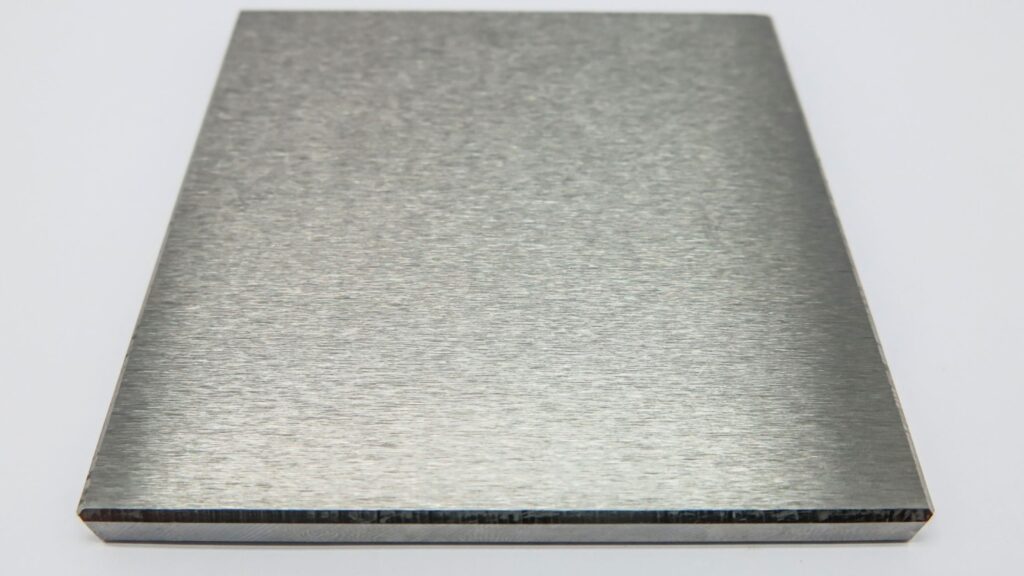
ASTM A128 Grade A is a high-manganese austenitic steel casting grade commonly known as Hadfield Manganese Steel. It is designed for components exposed to severe impact, crushing pressure and abrasive wear.
Unlike conventional abrasion-resistant steel plates, ASTM A128 Grade A develops a hardened surface during service through a process called work hardening. Its austenitic structure provides toughness, while repeated impact and deformation increase surface hardness.
This combination makes ASTM A128 Grade A suitable for mining machinery, rock crushers, railway components, quarrying equipment, mineral processing plants and heavy-duty material handling systems.
Emirerri Steel Tunisie supports industrial customers with technical material sourcing and steel product requirements for mining, phosphate processing, cement, construction and heavy industries.
Key Characteristics
- High manganese content: Contains at least 11% manganese.
- Austenitic structure: Provides a tough and ductile material condition after appropriate heat treatment.
- Work-hardening capability: Surface hardness increases under repeated impact and deformation.
- High impact resistance: Suitable for heavy-duty crushing and material handling.
- Wear resistance: Performs effectively in applications involving impact-driven abrasion.
- Casting suitability: Designed for complex wear-resistant cast components.
- Heat-treatment response: Requires appropriate solution heat treatment and rapid quenching.
Technical Specifications
| Property | Specification |
|---|---|
| Standard | ASTM A128/A128M |
| Grade | Grade A |
| Material designation | Hadfield Austenitic Manganese Steel |
| UNS designation | J91109 |
| Material category | Austenitic manganese steel |
| Product form under standard | Steel castings |
| Carbon content | 1.05–1.35% |
| Manganese content | 11.0% minimum |
| Silicon content | 1.00% maximum |
| Heat treatment | Solution heat treatment followed by quenching |
| Main characteristic | Work-hardening under impact |
| Primary applications | Mining, crushing, quarrying and heavy industries |
Important: ASTM A128/A128M covers steel castings. It should not be used as the sole product standard for conventional rolled manganese steel plates.
ASTM A128 Grade A Chemical Composition
The chemical composition of ASTM A128 Grade A is controlled to achieve the required austenitic structure, toughness and work-hardening characteristics.
| Chemical Element | Composition (%) |
|---|---|
| Carbon (C) | 1.05–1.35 |
| Manganese (Mn) | 11.00 minimum |
| Silicon (Si) | 1.00 maximum |
| Phosphorus (P) | 0.07 maximum |
| Chromium (Cr) | Not specified for standard Grade A |
| Molybdenum (Mo) | Not specified for standard Grade A |
| Nickel (Ni) | Not specified for standard Grade A |
| Iron (Fe) | Balance |
The composition limits above are based on the ASTM A128 Grade A requirements reproduced in the Steel Founders’ Society of America handbook. Additional alloying elements should not be assumed unless specified by the applicable purchase requirements.
ASTM A128 Grade A Mechanical Properties
ASTM A128 primarily specifies chemical composition and heat-treatment requirements for austenitic manganese steel castings. It does not provide a universal set of minimum tensile and yield-strength values applicable to every Grade A casting.
The mechanical behaviour of the material is influenced by casting design, section thickness, heat treatment, cooling conditions and service deformation.
| Mechanical Characteristic | Description |
|---|---|
| Tensile strength | Depends on casting condition and test requirements |
| Yield strength | Depends on material condition and testing |
| Elongation | Depends on casting quality and heat treatment |
| Impact toughness | Important property of properly heat-treated material |
| Work-hardening behaviour | High |
| Surface hardness | Increases during impact and service deformation |
| Core toughness | Retained when properly heat-treated |
Mechanical properties should be established using the applicable test requirements and the material inspection documentation.
ASTM A128 Grade A Physical Properties
The following information describes general characteristics of austenitic manganese steel. Exact numerical values should be confirmed against the manufacturer’s technical datasheet.
| Physical Property | Information |
|---|---|
| Material structure | Austenitic |
| Density | Manufacturer data to be confirmed |
| Magnetic behaviour | Generally low magnetic response in properly solution-treated condition |
| Thermal conductivity | Manufacturer data to be confirmed |
| Thermal expansion | Manufacturer data to be confirmed |
| Electrical resistivity | Manufacturer data to be confirmed |
| Work-hardening behaviour | High |
Work-Hardening Mechanism
One of the most important characteristics of ASTM A128 Grade A is its ability to work-harden.
When the material is exposed to repeated impact, crushing forces or surface deformation, its outer layer undergoes plastic deformation. This increases the hardness of the working surface while the underlying material retains toughness.
This behaviour is particularly valuable in equipment where both impact resistance and abrasion resistance are required.
Typical work-hardening sequence:
The component is supplied in its properly heat-treated condition.
Repeated impact or deformation occurs during operation.
The surface undergoes plastic deformation.
The surface hardness increases through work hardening.
The tougher underlying material helps resist fracture.
The amount of work hardening depends on impact intensity, service conditions, component design and material condition.
Heat Treatment
Heat treatment is essential for achieving the required toughness and ductility of austenitic manganese steel castings.
According to ASTM A128/A128M, the castings are uniformly heated to the temperature applicable to the grade, at least 1,000°C, held until the temperature is uniform throughout and then quenched in an appropriate medium, normally water.
The objective is to obtain a suitable austenitic structure and minimise undesirable carbide precipitation.
Important considerations include:
Uniform heating throughout the casting.
Appropriate holding time based on section size.
Rapid quenching according to the approved procedure.
Avoiding uncontrolled cooling that may cause carbide precipitation.
Inspection and verification after heat treatment.
The exact heat-treatment cycle should be established by the foundry and applicable material specification.
Welding
Austenitic manganese steel can be welded using suitable procedures, but welding requires special attention because of its high manganese content and work-hardening characteristics.
Important welding considerations include:
Use welding consumables specifically recommended for manganese steel.
Control heat input to avoid excessive temperature accumulation.
Keep interpass temperatures within the approved welding procedure.
Avoid unnecessary heating and prolonged welding cycles.
Remove damaged or cracked material before repair.
Follow qualified welding procedures and manufacturer recommendations.
Weld repairs on ASTM A128 castings must comply with the inspection and quality requirements of the applicable specification.
Machining and Fabrication
ASTM A128 Grade A is more difficult to machine than conventional carbon steel because its surface can work-harden during machining.
Machining: Use rigid equipment, sharp tools and suitable cutting parameters. Avoid excessive rubbing and tool dwell, which can promote surface work hardening.
Grinding: Use suitable grinding equipment and controlled procedures to avoid excessive heat generation.
Cutting: Cutting and removal methods should be selected according to the casting geometry and approved fabrication procedures.
Fabrication: Components should be designed and processed with consideration for the material’s high work-hardening tendency and casting-specific requirements.
Applications
ASTM A128 Grade A is widely used in heavy-duty components exposed to repeated impact, crushing and abrasive wear.
1. Mining and Mineral Processing
Jaw crusher wear components
Crusher liners
Rock crushing equipment
Ore processing machinery
Grizzly bars
Feeder components
Mining equipment wear parts
2. Phosphate Industry
Phosphate rock crushing equipment
Mineral handling components
Impact-resistant wear parts
Crusher liners
Screening machinery components
Heavy-duty material handling equipment
3. Quarrying and Aggregate Industry
Jaw crusher plates
Impact-resistant components
Rock handling equipment
Crushing machinery
Quarry wear parts
Screening equipment
4. Cement Industry
Crusher components
Clinker handling equipment
Heavy-duty impact parts
Raw material crushing machinery
Industrial wear-resistant castings
5. Railway and Heavy Engineering
Railway crossing components
Switch and crossing parts
Industrial wear-resistant castings
Heavy-duty machinery components
Impact-resistant engineering parts
Contact Us