Nickel Alloy 201
Nickel Alloy 201 Supplier in Tunisia
Introduction
Nickel Alloy 201 is a commercially pure wrought nickel alloy known for its low carbon content, good ductility, thermal and electrical conductivity, and corrosion resistance in suitable industrial environments. Identified by UNS N02201, Nickel 201 is the low-carbon counterpart of Nickel 200 (UNS N02200).
Its low carbon content makes Nickel 201 particularly suitable for certain applications involving prolonged exposure to elevated temperatures, where carbon-related effects may influence material performance. The alloy is used in chemical processing, caustic handling, electrical equipment, and selected industrial applications requiring commercially pure nickel.
Emirerri Steel supplies industrial metal products and nickel alloys for customers in India, Tunisia, North Africa, and international markets, subject to availability and specification confirmation.
Key Properties
- Low carbon content: Maximum carbon content is typically 0.02% under applicable specifications.
- Corrosion resistance: Performs well in selected alkaline and other compatible chemical environments.
- High nickel content: Provides the characteristics associated with commercially pure nickel.
- Thermal conductivity: Suitable for selected heat-transfer applications.
- Electrical conductivity: Used in certain electrical and electronic components.
- Ductility and formability: Can be formed using appropriate fabrication processes.
- Weldability: Generally weldable using qualified procedures and compatible filler materials.
- Elevated-temperature suitability: Often preferred over Nickel 200 in specific higher-temperature services where low carbon content is important.
Actual performance depends on the material condition, operating temperature, chemical medium, and applicable product specification.
Nickel Alloy 201 Chemical Composition
The following table presents typical specification limits. Confirm the governing standard and material test certificate for the exact product.
| Element | Typical Maximum / Minimum (wt. %) |
|---|---|
| Nickel (Ni) | 99.0 min |
| Copper (Cu) | 0.25 max |
| Iron (Fe) | 0.40 max |
| Manganese (Mn) | 0.35 max |
| Carbon (C) | 0.02 max |
| Silicon (Si) | 0.35 max |
| Sulfur (S) | 0.010 max |
Note: These are commonly referenced limits; applicable requirements may vary by product standard.
Nickel Alloy 201 Mechanical Properties
Mechanical properties vary with product form, dimensions, manufacturing process, and metallurgical condition. The figures below are indicative rather than guaranteed design values.
| Property | Indicative Value |
|---|---|
| Tensile Strength | Approximately 380–550 MPa |
| Yield Strength | Approximately 100–300 MPa |
| Elongation | Approximately 20–50% |
| Hardness | Depends on product form and condition |
For engineering design and acceptance testing, use the requirements of the applicable product specification and the certified test results supplied with the material.
Nickel Alloy 201 Physical Properties
| Property | Approximate Value |
|---|---|
| Density | 8.89 g/cm³ |
| Melting Range | Approximately 1435–1445°C |
| Young’s Modulus | Approximately 200–210 GPa |
| Thermal Conductivity | Approximately 70–90 W/m·K |
| Electrical Conductivity | Depends on temperature and material condition |
These values are general reference data. Temperature-specific design calculations should use appropriate technical data for the intended service conditions.
Standards and Specifications
The applicable standard depends on the product form and its intended use. Commonly referenced ASTM specifications include:
| Product Form | Commonly Referenced Standard |
|---|---|
| Bars and rods | ASTM B160 |
| Seamless pipe and tube | ASTM B161 |
| Sheet, strip, and plate | ASTM B162 |
| Seamless tubes for condensers and heat exchangers | ASTM B163, where applicable |
Always confirm the exact standard, grade, dimensions, tolerances, testing requirements, and supplementary conditions when ordering.
Equivalent Grades
| Standard / System | Designation |
|---|---|
| UNS | N02201 |
| Werkstoff Number | 2.4068 |
| Commercial Designation | Nickel 201 |
| Material Classification | Low-carbon, commercially pure wrought nickel |
Equivalent designations must be checked against the product form and applicable specification. Similar designations do not guarantee full interchangeability.
Available Forms
Depending on manufacturing capability and availability, Nickel 201 may be supplied in the following forms:
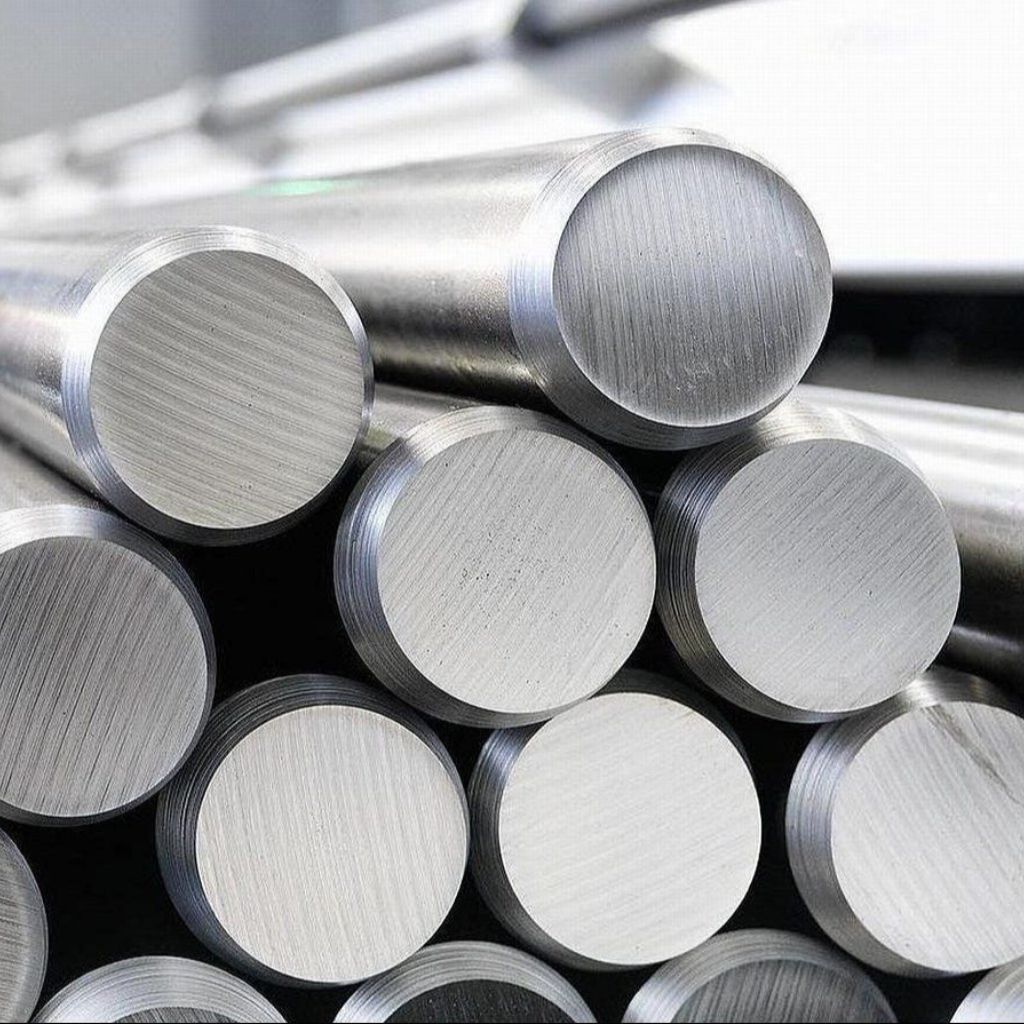
- Nickel 201 round bars and rods
- Nickel 201 flat bars
- Nickel 201 sheets and plates
- Nickel 201 strips and coils
- Nickel 201 seamless tubes
- Nickel 201 seamless pipes
- Nickel 201 wire
- Nickel 201 forged components, subject to specification and feasibility
Dimensions, tolerances, surface finish, quantity, and certification requirements should be confirmed during quotation.
Corrosion Resistance
Nickel 201 offers good corrosion resistance in several alkaline environments, including suitable caustic solutions. It can also be appropriate for selected neutral and reducing environments.
However, corrosion resistance depends on chemical concentration, temperature, impurities, aeration, and process conditions. The alloy should not be assumed suitable for every acid, oxidizing chemical, or aggressive industrial environment.
For critical applications, material selection should be based on the actual process chemistry and operating conditions.
Heat Resistance and Thermal Performance
The low carbon content of Nickel 201 makes it useful in certain applications involving prolonged elevated-temperature exposure where carbon-related effects need to be controlled.
The maximum permissible service temperature depends on mechanical loading, the surrounding atmosphere, the corrosive medium, and the governing design code. These factors should be reviewed before selecting the alloy for high-temperature service.
Heat Treatment and Fabrication
Nickel 201 can be formed, machined, and fabricated using suitable procedures for nickel alloys. Cold working may cause work hardening, which should be considered during forming operations.
Annealing can be used to restore ductility or obtain the required metallurgical condition. Heat-treatment parameters should follow the applicable product specification and qualified manufacturing procedures.
Welding
Nickel 201 is generally weldable using suitable welding processes and compatible nickel-alloy filler materials. Joint preparation, cleanliness, filler selection, and inspection requirements should be defined according to the intended service and applicable construction code.
For pressure equipment and other critical installations, welding should be performed using qualified procedures and appropriate inspection controls.
Applications
Nickel Alloy 201 is used in a range of industrial sectors:
Chemical processing: Selected tanks, vessels, and process equipment.
Caustic handling: Components exposed to compatible alkaline solutions.
Petrochemical industry: Selected equipment and components subject to chemical and temperature requirements.
Electrical and electronics: Applications requiring specific electrical properties.
Heat-transfer equipment: Selected tubes and components where the alloy is suitable.
Industrial manufacturing: Components requiring ductility and suitable corrosion resistance.
Specialty equipment: Fabricated parts designed around the alloy’s material characteristics.
Final material selection should consider operating conditions, applicable standards, and any relevant regulatory or process requirements.
Nickel 200 vs Nickel 201
Nickel 200 and Nickel 201 are commercially pure nickel grades. The principal difference is their specified carbon content.
| Characteristic | Nickel 200 | Nickel 201 |
|---|---|---|
| UNS Designation | N02200 | N02201 |
| Maximum Carbon Content | Typically 0.15% | Typically 0.02% |
| Main Feature | Commercially pure nickel | Low-carbon commercially pure nickel |
| Higher-Temperature Service | Evaluate for the specific conditions | Often preferred when carbon-related effects are a concern |
| Material Selection | Based on application and temperature | Based on application, temperature, and low-carbon requirements |
The grades should not be substituted automatically. Confirm the required standard, service temperature, and design requirements before selection.
Why Choose Emirerri Steel for Nickel Alloy 201?
Emirerri Steel supports industrial customers seeking metal products and alloy materials for projects in Tunisia, North Africa, and international markets.
When requesting a quotation, customers can specify:
- Required grade and product standard
- Product form and dimensions
- Quantity and delivery destination
- Inspection and testing requirements
- Material Test Certificate and other agreed documentation
Product availability, delivery lead time, certification, and conformity are confirmed during quotation and order review.
Contact us