ASTM A182 F22
ASTM A182 F22 Forged Alloy Steel in Tunisia
ASTM A182 F22 is a chromium-molybdenum alloy steel grade used for forged or rolled piping components designed for pressure service. It is commonly associated with industrial applications where elevated temperatures, mechanical stresses and demanding operating conditions require carefully specified material properties.
The ASTM A182/A182M specification covers forged or rolled alloy and stainless steel piping components, including flanges, fittings, valves and similar parts intended for pressure service. F22 alloy steel is used in selected power generation, refinery, petrochemical and process-industry applications, subject to the requirements of the applicable design code.
Emirerri Steel supports industrial buyers seeking ASTM A182 F22 forged alloy steel components according to project specifications, dimensions, applicable product standards and availability.
Key Features
- Chromium-molybdenum alloy: Designed for specified industrial pressure-service applications.
- High-temperature suitability: Used in systems where material performance at elevated temperatures is important.
- Mechanical strength: Properties depend on the applicable specification, material condition and heat treatment.
- Forged component manufacturing: Suitable for manufacturing components covered by the relevant product specification.
- Controlled heat treatment: Heat treatment must comply with the applicable standard and purchase requirements.
- Quality traceability: Material testing and inspection documentation can be provided according to the agreed order requirements.
Specifications
| Parameter | Description |
|---|---|
| Standard | ASTM A182/A182M |
| Grade | F22 |
| Material type | Chromium-molybdenum alloy steel |
| Product form | Forged or rolled components, as permitted by the specification |
| Common applications | Pressure-service piping components |
| Typical products | Flanges, fittings, valve components and other eligible parts |
| Heat treatment | As required by the applicable grade and specification |
| Dimensions | According to the applicable product standard and order |
| Inspection | As specified by the standard and purchase order |
| Certification | Material test certificate, according to order requirements |
The applicable ASTM edition, product form and any relevant class or supplementary requirements should be confirmed before ordering. Dimensions, tolerances, heat treatment and inspection requirements must follow the governing specifications.
ASTM A182 F22 – Chemical Composition
| Element | Composition (%) |
|---|---|
| Carbon (C) | 0.05–0.15 |
| Manganese (Mn) | 0.30–0.60 |
| Phosphorus (P) | 0.040 Max. |
| Sulfur (S) | 0.040 Max. |
| Silicon (Si) | 0.50 Max. |
| Chromium (Cr) | 2.00–2.50 |
| Molybdenum (Mo) | 0.87–1.13 |
ASTM A182 F22 – Mechanical Properties
| Property | Value |
|---|---|
| Tensile Strength | 515 MPa (75 ksi) Min. |
| Yield Strength | 310 MPa (45 ksi) Min. |
| Elongation | 20% Min. |
| Reduction of Area | 35% Min. |
| Brinell Hardness | 197 HBW Max. |
ASTM A182 F22 – Physical Properties
| Property | Typical Value |
|---|---|
| Density | 7.85 g/cm³ |
| Melting Range | Approx. 1,425–1,530°C |
| Modulus of Elasticity | Approx. 200–210 GPa |
| Thermal Conductivity | Approx. 30–40 W/m·K |
| Specific Heat Capacity | Approx. 460 J/kg·K |
| Coefficient of Thermal Expansion | Approx. 12 × 10⁻⁶/°C |
| Magnetic Properties | Magnetic |
Types of ASTM A182 F22 Forged Components
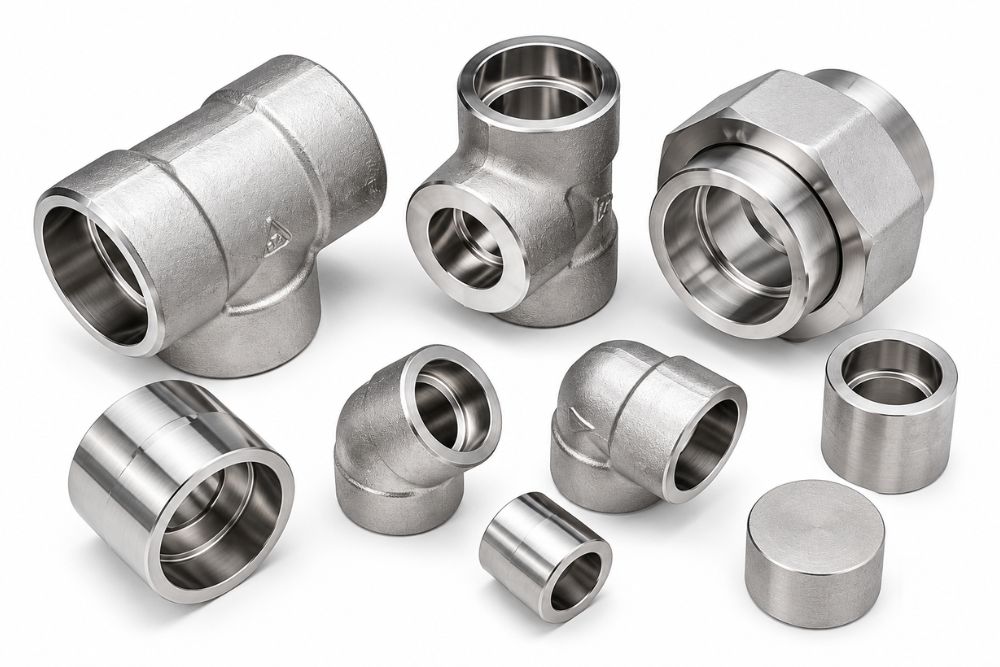
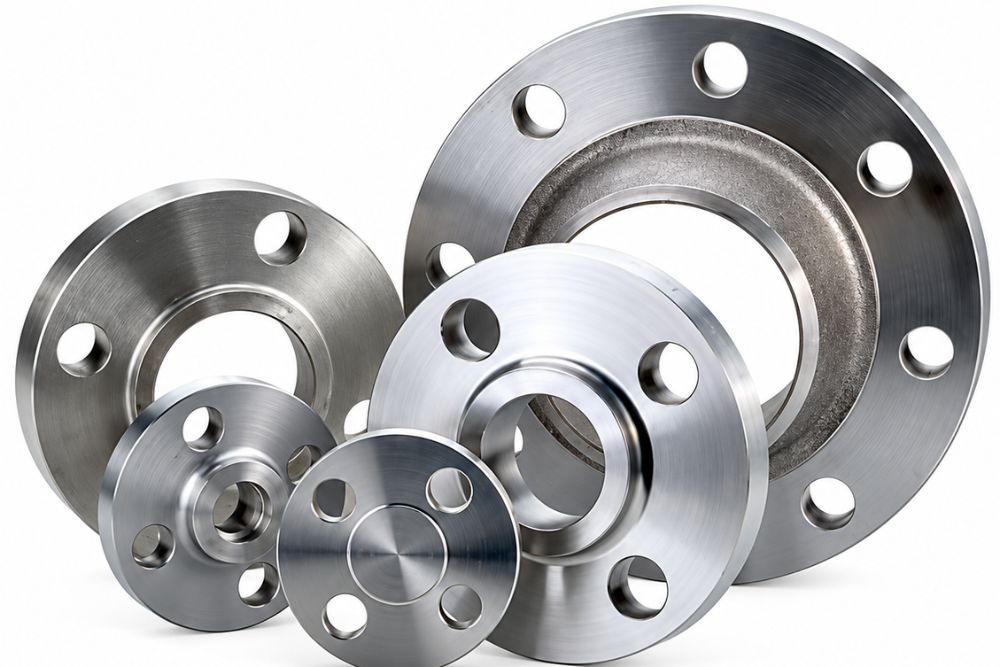
Depending on the applicable product standard, design and manufacturer’s capabilities, ASTM A182 F22 may be used for various forged or rolled pressure-service components.
Alloy Steel Flanges
Weld Neck Flanges
Blind Flanges
Slip-On Flanges
Socket Weld Flanges
Threaded Flanges
The availability and suitability of each flange type depend on the relevant dimensional standard, pressure class, design and manufacturing capability.
Other Forged Components
Eligible piping fittings
Valve components
Forged pressure-service parts
Special components manufactured to approved project drawings
The ASTM A182 F22 designation identifies the material grade; it does not independently determine a component’s dimensions, pressure rating or connection type.
High-Temperature Performance
ASTM A182 F22 is used in applications where the material’s mechanical performance at elevated temperatures is a key design consideration. Its suitability must be evaluated against the actual operating conditions and applicable construction code.
Important design considerations include:
Design and operating temperatures
Internal pressure and mechanical loading
Thermal cycling and start-up conditions
Process-fluid compatibility
Heat treatment and fabrication requirements
Applicable pressure-piping or equipment design codes
Maximum allowable operating temperatures and pressure ratings must be established using the governing code and engineering design data, not the material designation alone.
Oxidation and Corrosion Resistance
The chromium content of F22 alloy steel contributes to its oxidation behaviour under certain elevated-temperature conditions. However, ASTM A182 F22 is an alloy steel, not a stainless steel grade.
Its corrosion performance depends on the operating environment, process fluid, temperature, moisture and other service conditions. For corrosive applications, material suitability should be confirmed through engineering evaluation and the applicable project requirements.
Heat Treatment, Welding and Fabrication
Heat treatment is an important part of manufacturing ASTM A182 F22 components because it influences the material’s mechanical properties and microstructure.
Relevant fabrication considerations include:
Heat treatment according to the applicable specification
Qualified welding procedures, where welding is permitted or required
Selection of compatible welding consumables
Preheating and post-weld heat treatment, when required
Non-destructive examination according to the governing code
Material identification and traceability throughout fabrication
The appropriate procedures must be established for the component geometry, material condition, thickness and service requirements.
ASTM A182 F22 vs. ASTM A182 F11
ASTM A182 F22 and F11 are chromium-molybdenum alloy steel grades used in selected pressure-service and high-temperature applications. However, their compositions and specified properties differ.
ASTM A182 F11: Used in various industrial applications, depending on the specified class and operating conditions.
ASTM A182 F22: Selected when its particular material requirements and properties are appropriate for the design conditions.
Neither grade should automatically replace the other. Selection must consider the design code, temperature, pressure, required mechanical properties, fabrication procedures and process environment.
Quality Control and Certification
Depending on the purchase order and applicable requirements, quality assurance for ASTM A182 F22 components may include:
Material test certificate
Chemical composition analysis
Mechanical testing
Dimensional inspection
Visual examination
Non-destructive testing, where required
Heat-treatment documentation, where applicable
Product marking and material traceability
The actual inspection scope and documentation should be agreed with the supplier and specified in the purchase order.
Emirerri Steel – ASTM A182 F22 Forged Alloy Steel Supplier
Emirerri Steel supports industrial procurement for the oil and gas, refining, petrochemical, power generation and general process industries.
We can review enquiries for ASTM A182 F22 forged alloy steel flanges and other eligible components according to required dimensions, pressure classes, applicable standards, quantities, inspection requirements and delivery destinations.
Our team can also assess enquiries for other alloy steel grades based on project specifications and product availability.
Conclusion
ASTM A182 F22 is a chromium-molybdenum alloy steel grade used for forged or rolled pressure-service components in selected industrial applications. Correct material selection requires verification of the applicable standard, component specifications, heat treatment, design conditions and inspection requirements.
Contatc Us