ASTM A36
Carbon Steel ASTM A36
ASTM A36 Carbon Steel is one of the most widely used structural carbon steels for industrial, construction, and fabrication applications. It is known for its combination of good mechanical strength, excellent weldability, machinability, formability, and cost-effectiveness.
ASTM A36 is commonly supplied in the form of plates, sheets, bars, structural sections, angles, channels, beams, and other fabricated components.
Its versatility and availability make ASTM A36 a popular material for steel structures, industrial equipment, infrastructure, machinery supports, platforms, mining equipment, and general fabrication.
ASTM A36 is particularly suitable for applications where reliable structural performance and ease of fabrication are required without the need for high alloy content or specialized corrosion resistance.
Emirerri Steel supplies ASTM A36 Carbon Steel Plates, Sheets, Bars, and Structural Products for projects across Tunisia, Algeria, Morocco, Libya, and international markets.
Key Features
- Structural carbon steel
- Good mechanical strength
- Good yield strength
- Excellent weldability
- Good machinability
- Good formability
- Easy to cut and fabricate
- Widely available
- Cost-effective
- Suitable for welded and bolted structures
- Available in a wide range of dimensions
- Suitable for general industrial fabrication
Specifications
| Specification | Details |
|---|---|
| Grade | ASTM A36 |
| Type | Carbon Structural Steel |
| Standard | ASTM A36/A36M |
| UNS | K02600 |
| Approximate EN Comparable Grade | S275JR* |
| Product Forms | Plate, Sheet, Bar, Structural Sections |
| Typical Supply Condition | Hot Rolled |
| Surface | Mill Finish, Shot Blasted, Pickled or Prepared as specified |
| Weldability | Excellent |
| Heat Treatment | Generally not required for structural applications |
*S275JR may be comparable for certain structural applications, but it is not a universal direct equivalent. The applicable project standard should always be verified.
Equivalent Grades
| Standard | Grade |
|---|---|
| ASTM | A36 |
| UNS | K02600 |
| EN | S275JR* |
| DIN | St 37-2* |
| JIS | SS400* |
| GB/T | Q235B* |
*These grades are often considered comparable for certain applications, but their chemical compositions and mechanical requirements are not identical. Substitution should be approved according to project specifications.
Available Sizes
ASTM A36 Sheets & Plates
- Thickness: 3 to 300 mm
- Width: Up to 3000 mm
- Length: Up to 12000 mm
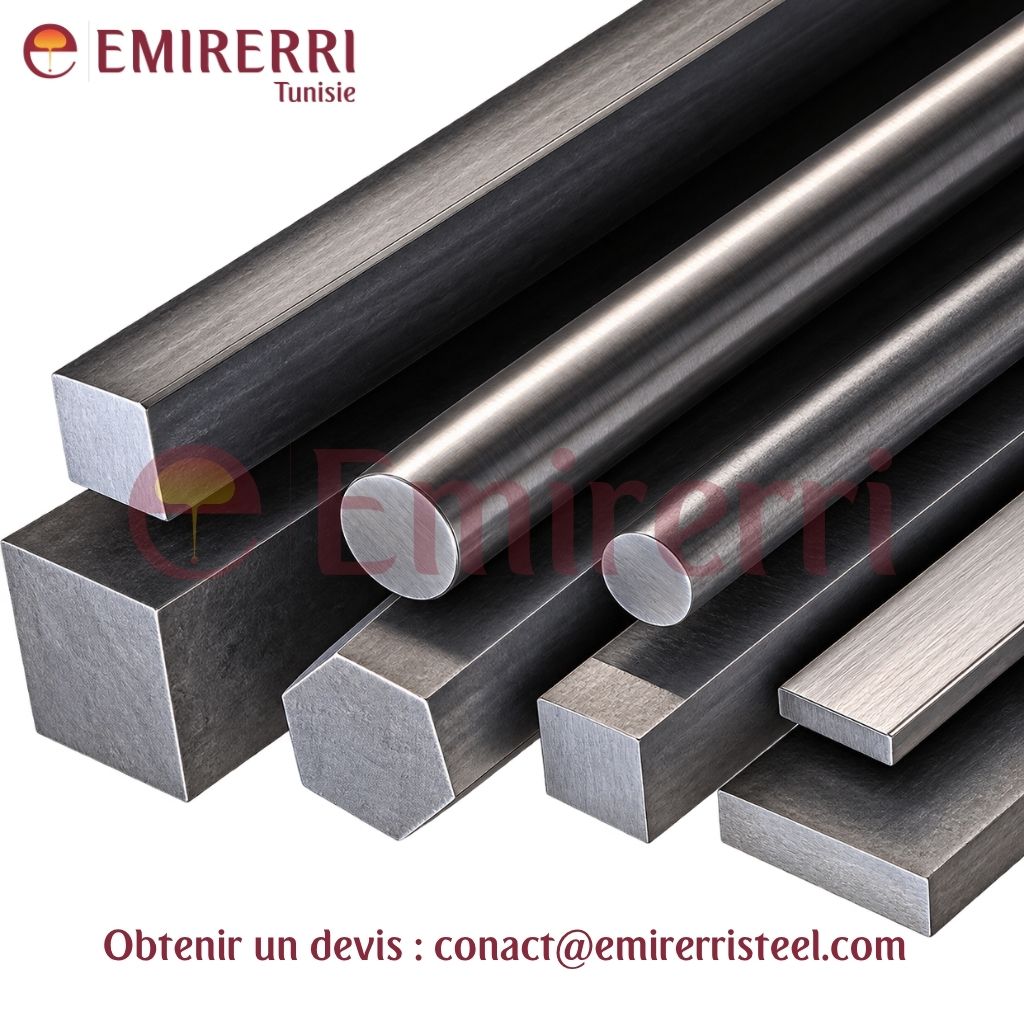
ASTM A36 Bars
- Round, square, flat and rectangular bars
- Dimensions according to applicable standards and project requirements
Structural Sections
- H-Beams
- I-Beams
- Channels
- Angles
- Flats
- Structural sections
Available sizes can vary according to product form, manufacturing facility, standard, and project requirements.
ASTM A36 Chemical Composition
Chemical limits can vary depending on product form and applicable requirements.
| Element | Maximum / Typical Content (%) |
|---|---|
| Carbon (C) | ≤ 0.26 |
| Manganese (Mn) | ≤ 0.80 – 1.20* |
| Phosphorus (P) | ≤ 0.040 |
| Sulfur (S) | ≤ 0.050 |
| Copper (Cu) | ≤ 0.20* |
| Iron (Fe) | Balance |
*Chemical requirements may vary depending on product type and thickness. Exact values should be confirmed from the applicable material test certificate (MTC).
ASTM A36 Mechanical Properties of
| Property | Value |
|---|---|
| Tensile Strength | 400–550 MPa |
| Minimum Yield Strength | ≥ 250 MPa |
| Elongation | Depends on thickness and product |
| Typical Hardness | ≈ 119–159 HB |
| Modulus of Elasticity | ≈ 200 GPa |
The minimum 250 MPa yield strength is one of the key characteristics that makes ASTM A36 suitable for general structural applications.
ASTM A36 Physical Properties of
| Property | Approximate Value |
|---|---|
| Density | 7.85 g/cm³ |
| Modulus of Elasticity | ≈ 200 GPa |
| Thermal Conductivity | ≈ 50 W/m·K |
| Specific Heat Capacity | ≈ 486 J/kg·K |
| Thermal Expansion Coefficient | ≈ 11.7 × 10⁻⁶ /°C |
| Melting Range | ≈ 1425–1540°C |
| Magnetic Properties | Magnetic |
Types of ASTM A36 Carbon Steel Products
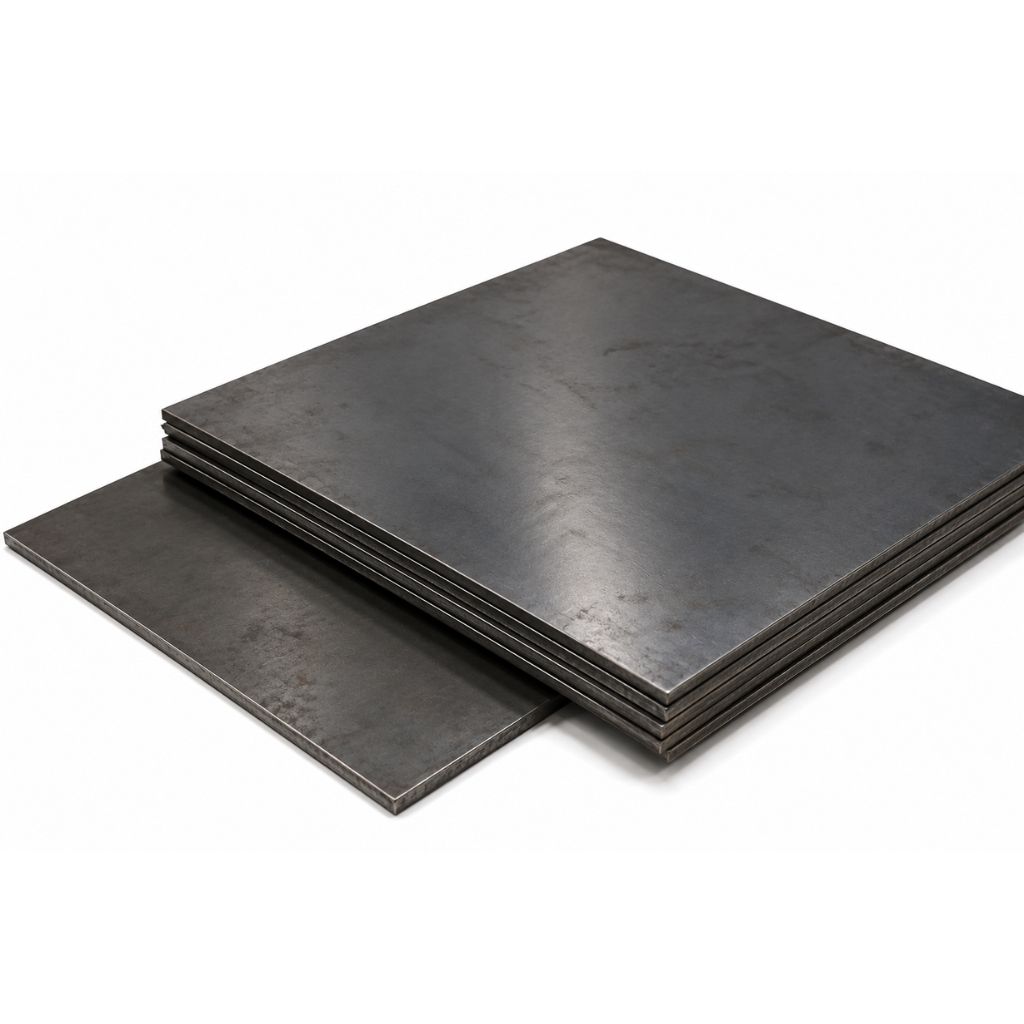
ASTM A36 Plates
Used for structural steelwork, industrial equipment, machine bases, tanks, platforms, and fabricated components.
ASTM A36 Sheets
Suitable for brackets, frames, panels, supports, chassis, and general industrial fabrication.
ASTM A36 Bars
Available as round, square, flat, and rectangular bars for structural and mechanical components.
ASTM A36 Structural Sections
Common structural forms include:
- Angles
- Channels
- I-Beams
- H-Beams
- Flats
- Structural profiles
These products are widely used in buildings, industrial structures, platforms, and infrastructure projects.
Types de Produits ASTM A36
Corrosion Resistance
ASTM A36 is a non-stainless carbon steel, so it does not provide the inherent corrosion resistance associated with stainless steel.
It can be affected by:
- Atmospheric moisture
- Water
- Humidity
- Marine environments
- Chemical exposure
- Salt and chloride environments
Corrosion protection can be improved using:
- Industrial painting
- Anti-corrosion coatings
- Hot-dip galvanizing
- Epoxy coatings
- Protective systems designed for the specific environment
For highly corrosive environments, stainless steel, weathering steel, or suitable alloy steels may be more appropriate.
Heat Resistance
ASTM A36 provides useful mechanical performance at normal and moderate temperatures.
However, its mechanical strength decreases as temperature increases. Therefore, ASTM A36 should not automatically be selected for prolonged high-temperature service.
For elevated-temperature applications, materials specifically designed for high-temperature service should be considered according to the applicable design code and operating conditions.
Heat Treatment
ASTM A36 is generally used without specialized heat treatment for standard structural applications.
However, heat treatments may be applied for specific fabrication requirements.
Annealing
Can be used to reduce internal stresses and improve ductility.
Normalizing
Can help produce a more uniform microstructure and mechanical properties.
Stress Relieving
May be used where significant residual stresses have been introduced during welding or fabrication.
Heat treatment should be selected based on the component geometry, manufacturing process, and applicable project requirements.
Welding
One of the major advantages of ASTM A36 is its excellent weldability.
Common Welding Processes
- SMAW
- GMAW / MIG
- GTAW / TIG
- FCAW
- SAW
Welding Advantages
- Good weldability
- Relatively low carbon content
- Easy fabrication
- Suitable for welded structures
- Compatible with a wide range of welding consumables when properly selected
For thick sections, low ambient temperatures, or specific welding procedures, preheating and interpass temperature control may be required.
Fabrication of ASTM A36
ASTM A36 can be fabricated using a wide range of conventional processes.
Cutting
- Laser cutting
- Plasma cutting
- Oxy-fuel cutting
- Waterjet cutting
- Mechanical sawing
Forming
- Bending
- Rolling
- Press forming
- Cold forming
- Drawing in suitable applications
Machining
- Turning
- Milling
- Drilling
- Threading
- Sawing
Assembly
- Welding
- Bolting
- Riveting
Its relatively simple fabrication characteristics make ASTM A36 particularly suitable for general structural steelwork.
Application
Construction Industry
- Structural frames
- Columns
- Beams
- Supports
- Platforms
- Steel structures
Infrastructure
- Bridges
- Walkways
- Industrial supports
- Road infrastructure
- Public structures
Industrial Manufacturing
- Machine bases
- Equipment supports
- Frames
- Industrial structures
- Conveyor systems
- Hoppers
Oil & Gas
- Pipe supports
- Platforms
- Equipment supports
- Secondary structures
- Auxiliary structures
Mining Industry
- Conveyor structures
- Hoppers
- Chutes
- Equipment frames
- Structural supports
General Fabrication
- Brackets
- Base plates
- Frames
- Structural components
- Fabricated steel assemblies
ASTM A36 in Tunisia, Algeria, Morocco & Libya
ASTM A36 Carbon Steel is well suited to construction and fabrication projects across Tunisia, Algeria, Morocco, and Libya.
It can be used for steel structures, platforms, pipe supports, industrial equipment, infrastructure, machine frames, conveyors, hoppers, and mining structures.
In the oil & gas, construction, energy, mining, infrastructure, and general engineering sectors, ASTM A36 offers a cost-effective solution when exceptionally high corrosion resistance or very high mechanical strength is not required.
ASTM A36 vs S275JR
| Property | ASTM A36 | S275JR |
|---|---|---|
| Type | Structural Carbon Steel | Non-Alloy Structural Steel |
| Standard | ASTM A36/A36M | EN 10025-2 |
| Yield Strength | ≥ 250 MPa | ≥ 275 MPa* |
| Tensile Strength | 400–550 MPa | ≈ 410–560 MPa |
| Weldability | Excellent | Good |
| Applications | Structures & fabrication | Structures & construction |
| Relationship | Comparable | Comparable |
*Depending on product thickness.
ASTM A36 and S275JR should not be treated as exact equivalents without checking chemical composition, mechanical requirements, dimensions, certification, and applicable project standards.
Conclusion
ASTM A36 Carbon Steel is a versatile structural steel offering an effective combination of mechanical strength, excellent weldability, formability, machinability, availability, and cost efficiency.
It is particularly suitable for plates, sheets, bars, beams, channels, angles, and structural sections used in construction, infrastructure, industrial equipment, mining, energy, and general fabrication.
For projects in Tunisia, Algeria, Morocco, and Libya, ASTM A36 provides a practical material solution for construction, infrastructure, oil & gas, mining, energy, industrial structures, and equipment fabrication where its strength and corrosion-protection requirements are appropriate.
Contact Us