HASTELLOY C-22 Alloy
HASTELLOY C-22 Alloy nickel-chromium-molybdenum-tungsten alloy Supplier in Tunisia
L’alliage HASTELLOY C-22 est un superalliage à base de nickel, de chrome, de molybdène et de tungstène, conçu pour résister à des environnements chimiques particulièrement corrosifs. Identifié par le numéro UNS N06022 et le numéro de matière 2.4602, il est utilisé dans les installations industrielles nécessitant une excellente résistance à la corrosion générale, à la corrosion par piqûres et à la corrosion caverneuse.
Grâce à sa composition chimique équilibrée, l’HASTELLOY C-22 offre une résistance élevée dans de nombreux milieux oxydants et réducteurs, notamment certains mélanges d’acides et des environnements contenant des chlorures. Il présente également une bonne aptitude au soudage lorsqu’il est mis en œuvre selon des procédures adaptées.
Emirerri Steel accompagne les professionnels dans l’approvisionnement en matériaux métalliques et produits de tuyauterie destinés aux industries chimiques, pétrochimiques, énergétiques, minières et aux autres secteurs industriels exigeants. Les formes disponibles, les dimensions, les normes et les documents de contrôle sont à confirmer selon chaque demande.
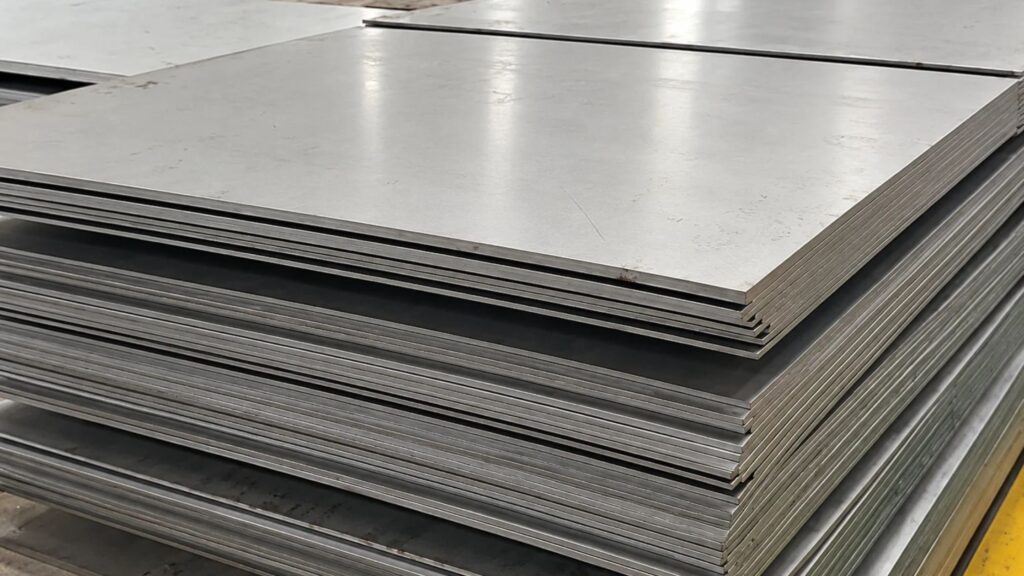
Key Properties
- Grade: HASTELLOY C-22
- UNS Number: N06022
- Werkstoff Number: 2.4602
- Alloy Type: Nickel-chromium-molybdenum-tungsten alloy
- Corrosion Resistance: Excellent resistance to many aggressive chemical environments
- Pitting Resistance: High resistance to localized corrosion in suitable conditions
- Weldability: Good with qualified welding procedures
- Fabrication: Suitable for forming and manufacturing industrial components
- Primary Applications: Chemical processing, pollution control, petrochemical equipment, pharmaceutical manufacturing and industrial piping
HASTELLOY C-22 Chemical Composition
The following table provides commonly referenced composition limits for HASTELLOY C-22. Final requirements must be verified against the applicable product specification and material test certificate.
| Chemical Element | Composition (%) |
|---|---|
| Nickel (Ni) | Balance |
| Chromium (Cr) | 20.00–22.50 |
| Molybdenum (Mo) | 12.50–14.50 |
| Iron (Fe) | 2.00–6.00 |
| Tungsten (W) | 2.50–3.50 |
| Cobalt (Co) | 2.50 max. |
| Manganese (Mn) | 0.50 max. |
| Silicon (Si) | 0.08 max. |
| Carbon (C) | 0.015 max. |
| Vanadium (V) | 0.35 max. |
| Phosphorus (P) | 0.020 max. |
| Sulfur (S) | 0.020 max. |
Chromium improves resistance to many oxidizing environments, while molybdenum and tungsten contribute to resistance against pitting and crevice corrosion. The low carbon content helps reduce the risk of detrimental carbide precipitation under suitable processing conditions.
HASTELLOY C-22 Mechanical Properties
The following values are indicative minimum values commonly reported for certain annealed product forms. Actual mechanical properties depend on the applicable standard, product dimensions and material condition.
| Mechanical Property | Indicative Value |
|---|---|
| Tensile Strength | 690 MPa minimum |
| 0.2% Yield Strength | 310 MPa minimum |
| Elongation | 45% minimum |
| Hardness | Depends on product form and condition |
These values should not be considered universal guarantees for every product. Always check the governing specification and material test certificate for the actual ordered material.
HASTELLOY C-22 Physical Properties
| Physical Property | Typical Value |
|---|---|
| Density | Approximately 8.69 g/cm³ |
| Modulus of Elasticity | Approximately 206 GPa |
| Thermal Conductivity at Room Temperature | Approximately 10.1 W/m·K |
| Mean Thermal Expansion Coefficient, 20–100°C | Approximately 12.4 × 10⁻⁶/K |
Physical properties can vary with temperature and material condition. Engineering design should use data applicable to the actual operating conditions.
Material Standards
HASTELLOY C-22 is covered by several ASTM and ASME specifications, depending on the product form and manufacturing method.
| Product Form | Common Specification |
|---|---|
| Sheets, Plates and Strips | ASTM B575 / ASME SB-575 |
| Bars and Rods | ASTM B574 / ASME SB-574 |
| Seamless Pipes and Tubes | ASTM B622 / ASME SB-622 |
| Welded Pipes | ASTM B619 / ASME SB-619 |
| Welded Tubes | ASTM B626 / ASME SB-626 |
| Pipe Fittings | ASTM B366 / ASME SB-366 |
| Forgings | ASTM B564 / ASME SB-564 |
| Welding Wire and Rods | AWS A5.14 / ASME SFA-5.14, ERNiCrMo-10, where applicable |
| Covered Welding Electrodes | AWS A5.11 / ASME SFA-5.11, ENiCrMo-10, where applicable |
The exact standard and edition should be confirmed according to the product form, dimensions, inspection requirements and applicable design code.
Equivalent Grades
| Designation | Reference |
|---|---|
| UNS Number | N06022 |
| Werkstoff Number | 2.4602 |
| Commercial Grade | HASTELLOY C-22 |
| Generic Alloy Name | Alloy 22 |
| Material Family | Nickel-chromium-molybdenum-tungsten alloy |
These designations are commonly associated with the same alloy. HASTELLOY C-22 is not automatically interchangeable with HASTELLOY C-276, HASTELLOY C-4 or INCONEL 625. Material substitution requires a review of the process environment, mechanical requirements, applicable standards and design code.
Corrosion Resistance
Resistance to Oxidizing Environments
HASTELLOY C-22 offers excellent resistance to many oxidizing chemical environments because of its relatively high chromium content. It is considered for selected chemical-processing systems where conventional stainless steels may not provide sufficient corrosion resistance.
Resistance to Reducing Environments
The combination of nickel and molybdenum contributes to resistance in many reducing chemical environments. Performance depends on chemical concentration, temperature, aeration and the presence of contaminants.
Resistance to Pitting and Crevice Corrosion
HASTELLOY C-22 is known for its resistance to localized corrosion, including pitting and crevice corrosion, in many chloride-containing environments. Actual performance depends on chloride concentration, temperature, deposits, crevice geometry and operating conditions.
Resistance in Mixed Chemical Processes
The alloy can be considered for industrial equipment exposed to combinations of aggressive chemicals. Its versatility makes it suitable for evaluation in reactors, heat exchangers, process vessels and piping systems where the complete process chemistry has been assessed.
Important: No material is resistant to every chemical under all conditions. Corrosion data and engineering assessment should be used to confirm suitability for severe or uncertain service environments.
Heat Resistance and Temperature Considerations
HASTELLOY C-22 may be used in selected elevated-temperature applications when its mechanical properties, corrosion performance and the relevant design-code requirements are satisfied.
The allowable operating temperature depends on the chemical environment, exposure duration, mechanical loading and equipment design. Selection should not be based solely on the alloy’s melting point or room-temperature corrosion performance.
For pressure equipment and high-temperature service, verify the allowable design stresses and permitted product forms under the applicable code.
Heat Treatment and Fabrication
HASTELLOY C-22 is commonly supplied in an annealed condition appropriate to its product specification. Solution heat treatment may be required after certain forming or manufacturing operations, depending on the amount of cold work and the required material properties.
Important fabrication considerations include:
Use tooling and machining practices suitable for nickel-based alloys.
Control work hardening during forming and machining.
Prevent contamination from carbon steel and other metals.
Maintain clean surfaces before welding and assembly.
Verify whether post-fabrication heat treatment is required by the applicable specification or project.
Cold working may affect the material’s mechanical properties and corrosion performance. Heat treatment requirements should be evaluated according to the manufacturing process and service conditions.
Welding
HASTELLOY C-22 generally offers good weldability when appropriate procedures and compatible consumables are selected. Proper welding practices help maintain the required corrosion resistance and mechanical properties.
Recommended controls include:
- Use qualified welding procedures and trained welders.
- Prepare and clean joint surfaces carefully.
- Select compatible filler metals, such as ERNiCrMo-10 where specified.
- Control heat input and interpass temperature.
- Prevent contamination by iron, oil, grease and other foreign materials.
- Perform inspection and testing according to project requirements.
The welding process, filler metal and any post-weld treatment should be confirmed by the responsible engineering team for the intended service conditions.
Applications
Chemical Processing Industry
Used in selected reactors, process vessels, heat exchangers, columns, piping systems and equipment exposed to aggressive chemical media.
Petrochemical Industry
Considered for specialized equipment requiring a combination of oxidation resistance and protection against localized corrosion.
Pollution Control and Gas Treatment
Used in selected scrubbers, flue-gas treatment components and systems exposed to corrosive condensates.
Pharmaceutical and Fine Chemical Manufacturing
Suitable for certain process equipment where corrosion resistance, product compatibility and material cleanliness are important.
Specialized Chemical and Nuclear Processing
May be specified for selected processing applications, subject to applicable design, regulatory and qualification requirements.
Industrial Piping Systems
Can be used in compatible pipes, tubes, fittings and other components when manufactured and certified to the relevant product standards.
Contact Us