XAR 400 Wear-Resistant Steel Plate
XAR 400 Wear-Resistant Steel Plate Supplier in Tunisia
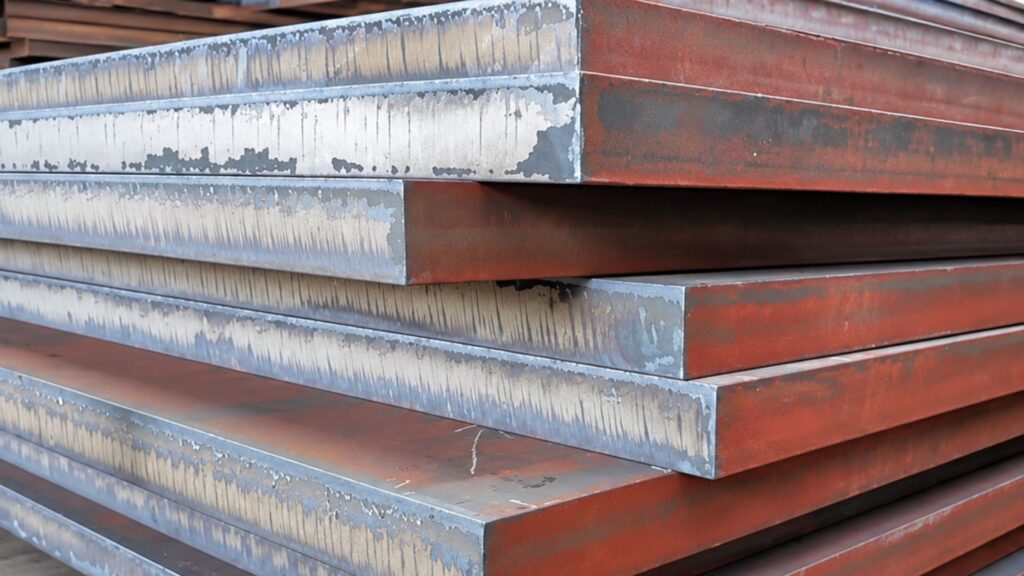
XAR 400 Wear-Resistant Steel Plate is a high-hardness abrasion-resistant steel developed for industrial equipment and structures exposed to continuous friction, sliding abrasion, impact and material handling. With a nominal hardness of approximately 400 HBW, XAR 400 offers a combination of wear resistance, toughness, strength and fabrication capability.
Emirerri Steel supplies wear-resistant steel plates for demanding industrial applications, including mining, phosphate processing, cement production, quarrying, construction, material handling and heavy equipment manufacturing. Product dimensions, technical specifications, certification and availability are confirmed according to project requirements.
What Is XAR 400 Steel?
XAR stands for Extra Abrasion Resistant. XAR 400 is a wear-resistant special structural steel designed to reduce material loss caused by abrasive contact.
The grade is commonly identified by material number 1.8714 in Thyssenkrupp’s Material Specification 703. Its hardened microstructure provides resistance to wear while retaining useful toughness and fabrication properties.
XAR 400 is particularly suitable for equipment that handles abrasive materials such as phosphate rock, minerals, sand, gravel, coal, cement raw materials and industrial aggregates.
Key Features
High hardness: Typical hardness range of 370–430 HBW.
Abrasion resistance: Helps reduce wear in equipment exposed to sliding and abrasive materials.
High strength: Suitable for heavy-duty industrial components.
Good toughness: Designed to withstand demanding service conditions.
Weldability: Can be welded using suitable procedures and consumables.
Formability: Suitable for controlled cold forming within manufacturer recommendations.
Longer service potential: Can help reduce replacement frequency and maintenance requirements compared with conventional structural steel in suitable applications.
XAR 400 Steel Plate – Technical Specifications
| Property | Specification |
|---|---|
| Material designation | XAR 400 |
| Material number | 1.8714 |
| Material category | Wear-resistant special structural steel |
| Nominal hardness | 400 HBW |
| Typical hardness range | 370–430 HBW |
| Delivery condition | Quenched or quenched and tempered, depending on product specification |
| Product form | Wear-resistant steel plate / heavy plate |
| Typical density | Approximately 7.85 g/cm³ |
| Main property | Abrasion and wear resistance |
| Applicable reference | Manufacturer-specific XAR 400 specification |
Note: XAR 400 is a proprietary grade designation. Confirm the manufacturer’s applicable material specification and inspection requirements before procurement.
XAR 400 Chemical Composition
The chemical composition of XAR 400 is controlled to achieve its required hardness, strength and wear-resistant properties. The following values represent maximum limits from a published thyssenkrupp XAR product information sheet.
| Chemical Element | Maximum Content (%) |
|---|---|
| Carbon (C) | 0.20 |
| Silicon (Si) | 0.80 |
| Manganese (Mn) | 1.50 |
| Phosphorus (P) | 0.020 |
| Sulphur (S) | 0.010 |
| Chromium (Cr) | 1.00 |
| Molybdenum (Mo) | 0.50 |
| Boron (B) | 0.005 |
| Nickel (Ni) | 1.50 |
| Iron (Fe) | Balance |
The chemical composition may vary with the manufacturer’s product specification and production route. The inspection certificate should be used to verify the actual heat analysis.
XAR 400 Mechanical Properties
XAR 400 combines high hardness with mechanical strength suitable for wear-exposed industrial components.
| Mechanical Property | Typical Published Value |
|---|---|
| Brinell hardness | 370–430 HBW |
| Yield strength (Rp0.2) | Approximately 1,100 MPa |
| Tensile strength (Rm) | Approximately 1,300 MPa |
| Elongation (A) | Approximately 11% |
| Charpy impact energy at −20°C | Minimum 27 J |
| Typical Charpy impact energy at −40°C | 45 J |
Important technical note: These are representative values from a published 2021 product information sheet. An earlier Material Specification 703 edition reports different typical strength and elongation values. Mechanical properties depend on the manufacturer’s specification, plate thickness, delivery condition and test method. Always refer to the applicable product certificate for guaranteed values.
XAR 400 Physical Properties
The following is general reference information for steel and should not be treated as a complete manufacturer-certified XAR 400 physical-property datasheet.
| Physical Property | Reference Value |
|---|---|
| Density | Approximately 7.85 g/cm³ |
| Magnetic behaviour | Ferromagnetic |
| Electrical conductivity | To be confirmed for the supplied grade and condition |
| Thermal conductivity | To be confirmed |
| Specific heat capacity | To be confirmed |
| Coefficient of thermal expansion | To be confirmed |
XAR Steel Grades Comparison
Different XAR grades are designed for different levels of abrasion resistance and service requirements.
| Steel Grade | Typical Hardness Range | General Application |
|---|---|---|
| XAR 300 | 270–330 HBW | Moderate wear applications |
| XAR 400 | 370–430 HBW | General-purpose abrasion resistance |
| XAR 450 | 420–480 HBW | Higher abrasion resistance |
| XAR 500 | 470–530 HBW | Severe abrasive wear |
| XAR 600 | Above 550 HBW | Extreme abrasion applications |
The ranges above are indicative product-family values. Availability, guaranteed hardness and thickness limits depend on the manufacturer.
Equivalent Grades
XAR 400 is often compared with other internationally marketed abrasion-resistant steel grades.
| Manufacturer / System | Commonly Compared Grade |
|---|---|
| thyssenkrupp | XAR 400 |
| SSAB | Hardox 400 |
| JFE Steel | EH400 |
| Ruukki | Raex 400 |
| Chinese grade family | NM400 |
These grades may have similar nominal hardness levels, but they are not automatically interchangeable. Their chemical composition, impact properties, thickness ranges, manufacturing processes and certification requirements can differ. Technical approval should be based on the relevant datasheets and service conditions.
Corrosion Resistance
XAR 400 is primarily designed to resist mechanical abrasion, not chemical corrosion. It does not provide the same corrosion resistance as stainless steel or specialised corrosion-resistant alloys.
For applications involving moisture, chemicals, acids, saline environments or corrosive process fluids, additional corrosion protection or a different material may be necessary.
Depending on the operating environment, suitable protective measures may include coating systems, painting, drainage design or replaceable wear liners.
Heat Resistance and Temperature Considerations
Standard XAR 400 is intended primarily for wear-resistant service under its specified operating conditions. Exposure to elevated temperatures can affect its hardness and mechanical properties.
For applications involving sustained high operating temperatures, consult the manufacturer’s technical recommendations before selecting the grade. Do not assume that standard XAR 400 has the same temperature capability as specialised variants such as XAR 400W or XAR 400HR.
Welding of XAR 400 Steel Plate
XAR 400 can be welded using suitable welding procedures. However, because of its high hardness and strength, welding requires careful control to avoid hydrogen-induced cracking and undesirable changes in the heat-affected zone.
Important welding considerations include:
- Select welding consumables suitable for the base material and required joint properties.
- Use low-hydrogen welding consumables and appropriate storage procedures.
- Determine preheating requirements based on plate thickness, carbon equivalent, restraint and ambient conditions.
- Control heat input and interpass temperature.
- Use an appropriate welding sequence to manage distortion and residual stress.
- Follow the manufacturer’s welding recommendations and an approved welding procedure specification (WPS).
The required preheating temperature should not be assumed from the grade name alone.
Cutting, Machining and Fabrication
XAR 400 plates can be processed using suitable industrial equipment and controlled fabrication procedures.
Cutting: Plasma, laser and oxy-fuel cutting may be used depending on plate thickness, equipment capability and manufacturer guidance. Thermal cutting can create a hardened or softened edge zone, so cutting parameters and edge preparation should be controlled.
Drilling and machining: Use suitable high-performance tooling, rigid machine setups and appropriate cutting parameters. The material’s high hardness makes machining more demanding than conventional mild steel.
Cold forming: Bending is possible within specified limits. Minimum bending radius, tooling clearance, rolling direction and plate thickness must be checked against the manufacturer’s recommendations.
Heat treatment: XAR 400 is generally supplied in a hardened delivery condition. Uncontrolled heating, stress relieving or re-quenching can change its mechanical properties. Any thermal treatment should follow the manufacturer’s instructions.
Applications
XAR 400 is used in industrial equipment exposed to abrasive materials, repeated friction and mechanical wear.
1. Mining and Phosphate Industry
- Mining equipment liners
- Phosphate rock handling systems
- Hopper and chute liners
- Crusher components
- Conveyor transfer points
- Screening equipment
- Wear plates for mineral processing machinery
2. Cement Industry
- Cement mill wear components
- Raw material handling equipment
- Crusher liners
- Conveyor chutes
- Storage hopper liners
- Clinker handling systems
3. Construction and Earthmoving Equipment
- Excavator bucket liners
- Loader bucket components
- Bulldozer wear parts
- Dump truck body liners
- Scraper blades
- Heavy-duty equipment attachments
4. Material Handling and Transportation
- Conveyor system liners
- Transfer chute plates
- Bulk material storage equipment
- Tipper body liners
- Industrial handling components
5. Steel, Recycling and Heavy Industries
- Scrap handling equipment
- Recycling machinery
- Industrial press components
- Crushing and pulverising equipment
- Wear-exposed machine structures
Contact Us