ASTM A128 Grade B-2
ASTM A128 Grade B-2 Manganese Steel Supplier in Tunisia
High-Impact Austenitic Manganese Steel for Mining, Crushing and Heavy Industries
ASTM A128 Grade B-2 is an austenitic manganese steel grade commonly associated with Hadfield steel. It is designed for cast components operating under repeated impact, heavy mechanical loading and demanding wear conditions.
Its high manganese content and austenitic structure provide excellent toughness and work-hardening characteristics. When exposed to repeated impact and deformation during operation, the material develops a harder surface layer, improving its resistance to mechanical wear.
ASTM A128 Grade B-2 is used in mining equipment, phosphate processing plants, stone crushers, cement plants, quarries and heavy-duty material handling systems.
Important: ASTM A128/A128M covers austenitic manganese steel castings. It is not a general specification for rolled manganese steel plates or sheets. Product form and certification must be verified before specifying compliance.
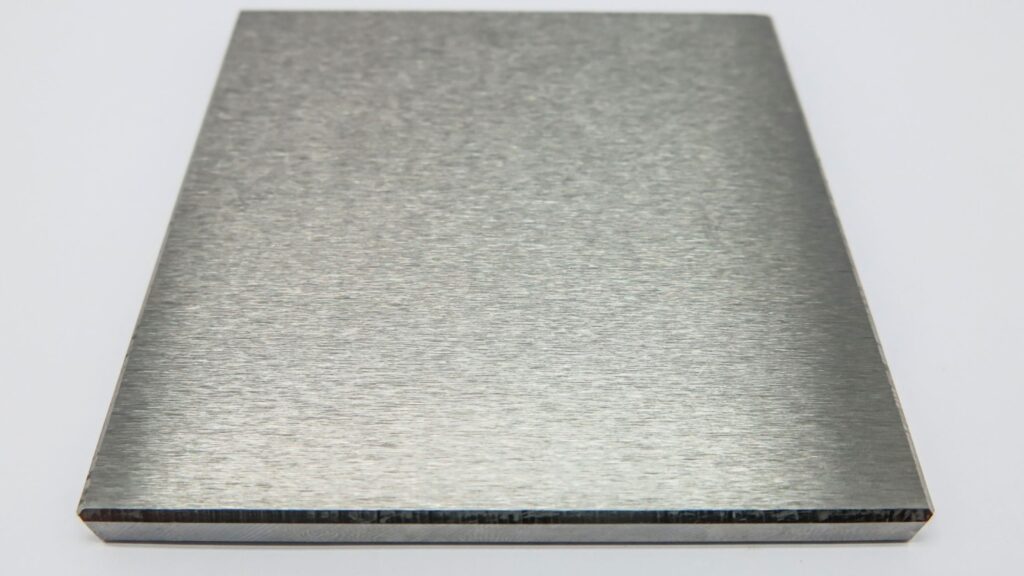
Specifaction
| Parameter | Specification |
|---|---|
| Material Designation | ASTM A128 Grade B-2 |
| Material Name | Austenitic Manganese Steel |
| Common Name | Hadfield Manganese Steel |
| Material Family | Austenitic Alloy Steel Casting |
| Product Type | Cast Components |
| Standard | ASTM A128/A128M |
| Metallurgical Structure | Austenitic after appropriate heat treatment |
| Main Characteristic | Work Hardening |
| Primary Performance | Impact and wear resistance |
| UNS Designation | To be confirmed against the applicable material reference |
ASTM A128 Gr B-2 Chemical Composition
The following composition ranges are commonly reported for ASTM A128 Grade B-2. The applicable edition of the standard and the manufacturer’s material test certificate must be used for contractual verification.
| Chemical Element | Symbol | Composition |
|---|---|---|
| Carbon | C | 1.05–1.20% |
| Manganese | Mn | 11.50–14.00% |
| Silicon | Si | 1.00% Max. |
| Phosphorus | P | 0.07% Max. |
| Sulphur | S | Verify applicable specification |
| Chromium | Cr | Not specified for this grade |
| Molybdenum | Mo | Not specified for this grade |
| Nickel | Ni | Not specified for this grade |
| Iron | Fe | Balance |
Note: Elements not specified in the grade chemistry should not be interpreted as guaranteed zero values. Actual residual elements should be checked against the manufacturer’s test certificate.
ASTM A128 Gr B-2 Mechanical Properties
ASTM A128 does not establish universal tensile strength, yield strength, elongation or hardness minimums applicable to every Grade B-2 casting.
Mechanical properties depend on casting geometry, section thickness, heat treatment and the agreed testing requirements.
| Mechanical Property | Specification |
|---|---|
| Tensile Strength | As per manufacturer’s test certificate |
| Yield Strength | As per manufacturer’s test certificate |
| Elongation | As per manufacturer’s test certificate |
| Initial Hardness | Depends on metallurgical condition |
| Impact Resistance | High after appropriate heat treatment |
| Work-Hardening Capability | High |
| Wear Resistance | Depends on operating conditions |
ASTM A128 Gr B-2 Physical Properties
| Physical Property | Value |
|---|---|
| Density | To be confirmed by manufacturer |
| Crystal Structure | Austenitic |
| Thermal Conductivity | To be confirmed |
| Modulus of Elasticity | To be confirmed |
| Thermal Expansion Coefficient | To be confirmed |
| Melting Range | Depends on chemical composition |
Heat Treatment
Heat treatment is essential to obtain the required austenitic structure and toughness of ASTM A128 Grade B-2 manganese steel.
| Parameter | General Requirement |
|---|---|
| Heat Treatment Type | Solution Heat Treatment |
| Heating Temperature | Generally at least 1,000°C |
| Heating | Uniform throughout the casting |
| Holding Time | Until the section reaches a uniform temperature |
| Cooling Method | Rapid Quenching |
| Quenching Medium | Generally Water |
| Main Objective | Obtain an austenitic structure and improve toughness |
The actual heat-treatment cycle must be established by the casting manufacturer according to component geometry, section thickness and applicable specification requirements.
Work-Hardening and Wear Resistance
One of the most important characteristics of ASTM A128 Grade B-2 is its ability to work-harden under repeated impact and mechanical deformation.
During service, the surface gradually becomes harder while the properly heat-treated material retains its characteristic toughness.
Key characteristics include:
- High resistance to repeated impact.
- Strong work-hardening capability.
- Good toughness after suitable heat treatment.
- Suitability for heavy-duty crushing applications.
- Performance in demanding mining and material-handling environments.
Machining and Welding
Machining: Austenitic manganese steel is difficult to machine because it work-hardens rapidly during cutting. Suitable cutting tools, stable machining conditions and controlled cutting parameters are necessary.
Welding: Welding requires a qualified procedure specifically suitable for manganese steel. Appropriate filler materials, controlled heat input and interpass temperature management are important. Casting repairs must follow the applicable quality and inspection requirements.
ASTM A128 Grade A vs Grade B-2
| Parameter | Grade A | Grade B-2 |
|---|---|---|
| Carbon | 1.05–1.35% | 1.05–1.20% |
| Manganese | 11.00% Min. | 11.50–14.00% |
| Silicon | 1.00% Max. | 1.00% Max. |
| Phosphorus | 0.07% Max. | 0.07% Max. |
| Material Family | Hadfield Manganese Steel | Hadfield Manganese Steel |
| Product Form | Castings | Castings |
| Heat Treatment | Solution treatment and rapid quenching | Solution treatment and rapid quenching |
Both grades belong to the austenitic manganese steel family, but their chemical composition requirements differ. Material selection should be based on the applicable standard, casting design and operating conditions.
Applications
Mining and Phosphate Processing
- Crusher jaws and wear components.
- Primary and secondary crusher parts.
- Mill liners and impact-resistant components.
- Ore and phosphate handling equipment.
- Heavy-duty material processing systems.
Cement and Quarry Industries
- Stone crusher components.
- Impact plates and protective castings.
- Crushing chamber components.
- Material handling equipment.
- Wear-resistant industrial castings.
Heavy Engineering
- Impact-resistant cast components.
- Industrial machinery wear parts.
- Heavy-duty material handling systems.
- Components exposed to repeated mechanical deformation.